

Wheel alignments are usually not covered under a standard vehicle warranty because alignment is commonly treated as a maintenance service or an adjustment affected by road conditions. However, coverage may apply during a short adjustment period or when a warranted suspension, steering, or factory defect causes the wheels to become misaligned. Your warranty booklet and dealer inspection determine whether the service qualifies.
A vehicle can leave the factory properly aligned and still develop an alignment problem after hitting a pothole, striking a curb, or driving repeatedly over rough roads. Because these events are outside the manufacturer’s control, most warranties exclude the resulting adjustment.
The answer is not always a flat no, though. New-car warranties sometimes include a limited adjustment period. An alignment may also be covered when it is necessary to correct a manufacturing defect or complete another approved warranty repair. Understanding the difference between normal maintenance, road damage, and defective parts can help you determine who is responsible for the cost.
How Wheel Alignment Warranty Coverage Works
A standard factory warranty generally pays to repair defects in materials or workmanship during a stated period. Wheel alignment is different from a failed engine component or a defective electrical module because the alignment angles can change without any part being defective.
Vehicle manufacturers commonly classify alignment as an adjustment or maintenance item. Like tire balancing and brake adjustment, it may receive shorter coverage than major mechanical systems, or it may be excluded entirely after delivery.
Coverage normally depends on three questions:
- Does the warranty include an adjustment period?
- Did a covered component or factory condition cause the misalignment?
- Is there evidence of road impact, collision damage, modification, or ordinary wear?
The dealer or warranty administrator may inspect the vehicle before deciding. A technician can measure the alignment angles and examine the tires, wheels, steering system, and suspension for evidence of the underlying cause.
Standard Factory Warranty Versus Adjustment Coverage
Many buyers assume that a bumper-to-bumper warranty covers every vehicle issue. The phrase sounds broad, but every warranty contains exclusions, time limits, and definitions.
A new-vehicle limited warranty usually covers defects in factory-installed parts. Alignment may instead fall under a shorter adjustment provision. Depending on the manufacturer, this special coverage might last only a few months or a limited number of miles. Some manufacturers provide no separate alignment coverage at all.
An adjustment period is designed to address concerns that appear shortly after delivery, such as a vehicle pulling despite no evidence of impact or abnormal use. Once the period ends, the owner normally pays for routine alignment service unless a separate covered defect is responsible.
Never rely only on the salesperson’s wording or a general warranty summary. The warranty booklet supplied with the vehicle is the controlling document. Look for sections labeled adjustments, maintenance services, wheel alignment, tires, exclusions, or owner responsibilities.
Situations When Wheel Alignment May Be Covered
Although alignment is commonly excluded as routine maintenance, several circumstances may support a warranty claim.
The Vehicle Is Within the Initial Adjustment Period
Some new vehicles include limited coverage for wheel alignment, balancing, or similar adjustments. If the vehicle pulls, the steering wheel is off-center, or the tires show unusual wear soon after purchase, report the concern immediately.
Waiting can weaken the claim because additional mileage and road exposure make it harder to show that the condition existed at delivery. Ask the dealer to document the complaint on the repair order even if the vehicle cannot be inspected that day.
A Defective Suspension Component Caused the Problem
Alignment angles depend on suspension and steering components holding the wheels in precise positions. A defective control arm, bushing, ball joint, tie rod, strut mount, wheel bearing, or subframe component may allow those angles to change.
If the failed part is covered under warranty, the manufacturer may also cover the alignment required after replacing it. In this case, alignment is not being performed as ordinary maintenance. It is a necessary part of the authorized repair.
The Factory Alignment Was Incorrect
A vehicle can occasionally be delivered with alignment settings outside the manufacturer’s specifications. If the issue is identified early and the inspection shows no impact or damaged parts, it may qualify as a factory adjustment concern.
Documentation matters. The alignment report should show the measured angles before and after correction. Without measurements, a statement that the vehicle “feels wrong” may not be enough to establish a warrantable condition.
A Warranty Repair Requires Realignment
Certain covered repairs require suspension or steering parts to be removed. Alignment may be necessary after the work to restore the vehicle to specification.
For example, replacing a covered steering rack, tie rod, strut, control arm, or subframe may change wheel position. When alignment is part of the approved repair procedure, it may be included in the warranty claim rather than billed separately.
A Recall or Service Campaign Includes Alignment
A manufacturer recall or service campaign may involve components that affect wheel alignment. If the official repair instructions require an alignment, the manufacturer generally pays for that step under the campaign.
Recall coverage is separate from ordinary warranty coverage and can remain available even after the basic warranty expires. The exact remedy depends on the recall instructions for the vehicle identification number.
Situations When Alignment Is Usually Not Covered
Most rejected alignment claims involve outside influence, ordinary use, or excluded modifications rather than a manufacturing defect.
Potholes and Road Hazards
Hitting a pothole can alter alignment angles, bend a wheel, damage a tire, or affect suspension parts. Factory warranties generally exclude this type of road damage because it is not caused by defective manufacturing.
Vehicle insurance or a tire-and-wheel protection plan may provide separate coverage in limited circumstances, but deductibles and exclusions apply.
Curb Strikes and Collisions
Contact with a curb, debris, another vehicle, or a fixed object is normally treated as impact damage. Even a low-speed strike can move alignment settings or bend a steering component.
The repair may fall under collision insurance rather than the factory warranty. An alignment alone will not solve the problem if a component is bent.
Normal Wear and Routine Maintenance
Alignment can gradually shift as suspension components settle or wear. Tires also develop wear patterns from inflation, rotation habits, driving style, and road surfaces.
Manufacturers normally place responsibility for routine inspections and adjustments on the owner. A warranty is meant to correct defects, not eliminate every maintenance cost.
Vehicle Modifications
Lowering springs, lift kits, nonstandard wheels, oversized tires, suspension upgrades, and altered ride height can change alignment geometry. A manufacturer may deny alignment coverage when a modification caused or contributed to the condition.
Modification does not automatically cancel every part of a vehicle warranty. However, a claim can be denied when the altered equipment is connected to the reported failure.
Worn or Damaged Tires
Alignment does not reverse existing tire wear. If tires are cupped, feathered, underinflated, or damaged, the vehicle may still pull or vibrate after an alignment.
Tires usually have separate coverage from the tire manufacturer, and even that warranty commonly excludes irregular wear caused by poor alignment, road damage, or lack of maintenance.
Warranty Coverage by Plan Type
Different protection plans handle alignment in different ways.
Coverage type | Is alignment usually covered? | Possible exception |
New-vehicle limited warranty | Usually excluded or limited | Short adjustment period or factory defect |
Powertrain warranty | No | Alignment is unrelated to most powertrain parts |
Extended warranty or service contract | Usually no | Covered suspension repair requires alignment |
Certified pre-owned warranty | Usually no | Specific covered steering or suspension defect |
Tire warranty | Usually no | Rare plan-specific benefits or road-hazard package |
Maintenance plan | Sometimes | Only if alignment is listed in the contract |
Tire-and-wheel protection | Sometimes | Road-hazard terms may include related services |
Collision insurance | Not as maintenance | May be included with a covered accident repair |
The words “extended warranty” can be misleading. Many products sold under that label are service contracts with their own covered-component lists. If wheel alignment is not specifically listed, assume it is excluded until the administrator confirms otherwise in writing.
Does a Suspension Warranty Include Wheel Alignment?
A suspension warranty does not automatically provide free alignments. It may cover defective suspension parts, but the alignment itself is usually covered only when required to complete an approved repair.
Suppose a covered tie rod fails and must be replaced. Because tie-rod adjustment directly affects toe alignment, an alignment is normally part of the repair process. By contrast, if every suspension component is functioning correctly and the car is misaligned after a pothole impact, the suspension warranty will probably not apply.
Ask the service advisor whether alignment labor is included in the authorized repair before work begins. Getting that answer early prevents an unpleasant surprise on the final invoice.
Does an Extended Warranty Cover Wheel Alignment?
Most extended warranties exclude wheel alignment as maintenance or adjustment. They may cover specific steering and suspension components, but contracts differ widely.
Review the sections for covered components, exclusions, maintenance, adjustments, consequential damage, and required repairs. Some contracts list only what they cover, while exclusionary plans cover many components except those specifically excluded.
Even when a failed component qualifies, the administrator may require prior authorization. Starting repairs before authorization can result in denial. The repair facility may need to provide diagnostic findings, photos, measurements, or an estimate before receiving approval.
Signs Your Vehicle Needs an Alignment Check
Warranty coverage and mechanical need are separate issues. Whether someone else pays or not, alignment should be checked when the vehicle shows symptoms that could affect tire life or handling.
Common warning signs include:
- The vehicle pulls left or right on a reasonably level road
- The steering wheel sits off-center while driving straight
- The tires show feathering or rapid wear on one edge
- Steering feels unstable or requires frequent correction
- The vehicle recently hit a major pothole or curb
- Suspension or steering parts were replaced
- The vehicle handles differently after an accident
Pulling does not always mean the alignment is wrong. Uneven tire pressure, tire construction, brake drag, road crown, or worn suspension parts can produce similar symptoms. A complete inspection should identify the cause before adjustments are made.
How a Shop Determines Whether Alignment Is Needed
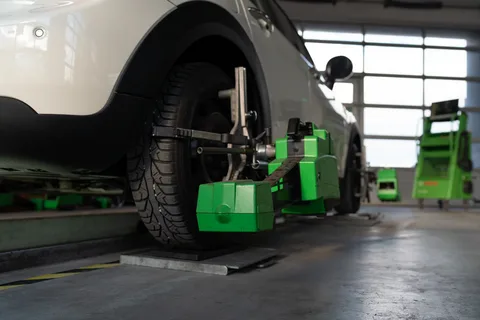
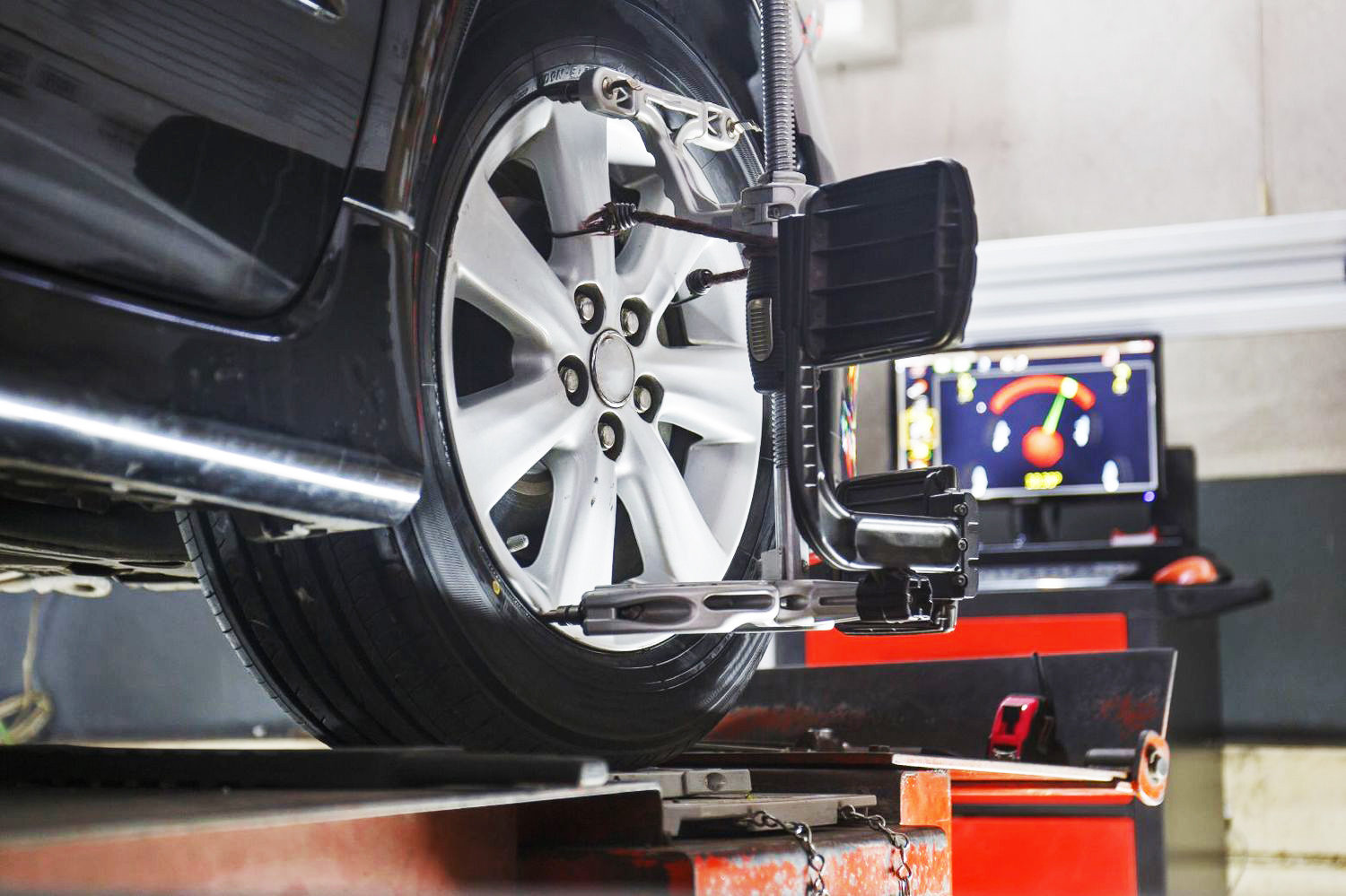
A technician begins by checking tire condition and pressure, steering play, suspension wear, and visible damage. The vehicle is then placed on an alignment rack, where sensors measure wheel angles.
The three primary alignment angles are:
Toe
Toe describes whether the tires point slightly inward or outward when viewed from above. Incorrect toe can cause rapid feathered tire wear and unstable tracking.
Camber
Camber describes the inward or outward tilt of the wheel when viewed from the front. Excessive positive or negative camber can wear one side of the tire.
Caster
Caster describes the steering axis angle when viewed from the side. It affects straight-line stability, steering return, and directional pull.
Not every angle is adjustable on every vehicle. If a nonadjustable angle is outside specification, the technician may suspect a bent, worn, shifted, or incorrectly installed component. That finding can be important when evaluating a warranty claim.
How to File a Wheel Alignment Warranty Claim
If you believe the alignment problem resulted from a factory condition or covered component, follow a documented process.
- Read the warranty terms. Check the time and mileage limits for adjustments and the exclusions for tires, impacts, and maintenance.
- Record the symptoms. Note when the pulling, off-center steering, or tire wear began and whether any impact occurred.
- Schedule an inspection promptly. Delaying allows tire damage to increase and may move the vehicle outside a short adjustment period.
- Request measurements. Ask for a printed before-and-after alignment report.
- Ask for the cause in writing. The repair order should state whether a defective part, impact damage, wear, or adjustment issue caused the condition.
- Confirm authorization. Do not assume warranty approval merely because the vehicle is at a dealership.
- Keep every document. Save repair orders, tire-rotation records, alignment reports, receipts, and photographs.
If the claim is denied, ask for the specific warranty clause and technical reason. “Alignment is maintenance” may be correct, but it does not explain a situation in which a covered defective component created the need for alignment.
How Much Does a Wheel Alignment Cost Without Warranty?
Alignment prices vary by location, vehicle design, shop equipment, and whether the service covers two wheels or all four. Luxury, performance, heavily modified, and advanced driver-assistance-equipped vehicles may require additional procedures.
The advertised alignment price may not include repairs needed before adjustment. Worn tie rods, ball joints, bushings, wheel bearings, or damaged wheels must often be corrected first. Aligning a vehicle with loose or bent components produces unreliable results.
Some vehicles also require steering-angle sensor calibration or driver-assistance system calibration after certain repairs. These services are not automatically included in a basic alignment quote.
Ways to Protect Your Alignment and Warranty Claim
Drivers cannot avoid every pothole, but they can reduce unnecessary alignment problems and preserve useful documentation.
- Slow down for rough roads, railroad crossings, and speed bumps.
- Avoid striking curbs while parking.
- Maintain correct tire pressure.
- Rotate tires according to the recommended schedule.
- Inspect tires regularly for uneven wear.
- Have the vehicle checked after a strong road impact.
- Keep maintenance and repair records.
- Report alignment symptoms promptly during the warranty period.
- Avoid suspension modifications unless their effects are fully understood.
Routine inspections can reveal worn components before they damage tires. They also establish a service history that may help when a warranty administrator asks when the problem began.
Frequently Asked Questions
Is Wheel Alignment Included in a Bumper-to-Bumper Warranty?
Usually not for the entire warranty term. Some manufacturers cover alignment only during a short initial adjustment period. It may also be covered when a factory defect or warranted steering or suspension component causes the misalignment.
Will a Dealership Align a New Car for Free?
A dealership may provide a free alignment if the vehicle is within the manufacturer’s adjustment period and there is no evidence of impact, misuse, or modification. Coverage depends on the written warranty and inspection findings.
Does a Tire Warranty Pay for Wheel Alignment?
Most tire warranties do not pay for routine alignment. They may also exclude irregular tire wear caused by misalignment, incorrect inflation, road damage, or inadequate rotation. A separate road-hazard or maintenance plan may offer limited benefits.
Is Alignment Covered After Warranty Suspension Work?
It may be. If alignment is required to complete an approved repair involving a covered tie rod, control arm, strut, steering rack, or similar component, it may be included in the warranty claim. Confirm authorization before the service begins.
Can a Warranty Claim Be Denied Because I Hit a Pothole?
Yes. Factory warranties generally exclude pothole and impact damage because these are external causes rather than manufacturing defects. Depending on the damage and policy terms, insurance or a separate tire-and-wheel plan may offer coverage.
Conclusion
Wheel alignments are not usually covered for the full length of a standard vehicle warranty. Manufacturers commonly treat them as maintenance adjustments because road impacts, driving conditions, tire wear, and modifications can change alignment without any factory part being defective.
Coverage may still apply during a short new-vehicle adjustment period, when the original alignment was incorrect, or when a covered steering or suspension defect makes realignment necessary. Recalls and authorized warranty repairs can also include alignment when the manufacturer’s procedure requires it.
Check the actual warranty booklet, report symptoms promptly, and request written measurements and inspection findings. The cause of the misalignment matters more than the adjustment itself. A warranty pays for defects, not every pothole with a grudge.