
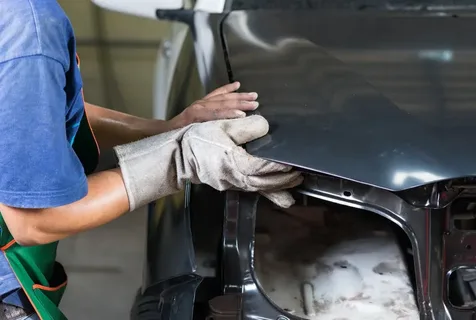
The best adhesives for car body repair are usually two-part epoxy panel-bonding adhesives for metal panels and flexible urethane or epoxy repair adhesives for plastic parts. Products such as 3M Panel Bonding Adhesive are designed for approved steel, aluminium, SMC and fibreglass panel applications, while specialist flexible adhesives are better for bumpers and plastic components. Always follow the vehicle manufacturer’s repair procedure, especially on structural or crash-critical parts.
Modern car bodies are no longer assembled or repaired using welding alone. Depending on the vehicle, manufacturers may use adhesives alongside spot welds, rivets and other joining methods to provide strength, corrosion protection and consistent panel fit.
That does not mean one tube of automotive glue can be used everywhere on a vehicle. A quarter panel, plastic bumper, roof skin and structural frame component can all require completely different products and procedures.
So, what are the best adhesives for car body repair? The answer depends on the material being repaired, whether the component is structural, the manufacturer’s repair instructions and the conditions the adhesive must withstand.
Several types of automotive adhesives are used during collision and body repair.
The most common include:
Each product serves a different purpose.
The adhesive that works well for bonding a non-structural quarter panel may be completely unsuitable for repairing a flexible bumper.
This is why professional repair procedures focus on application-specific adhesives rather than simply choosing the strongest adhesive available.
Two-part epoxy adhesives are among the most commonly used products for automotive metal panel bonding.
A professional panel adhesive combines two components that chemically react after being mixed.
These adhesives can provide:
One example is 3M Panel Bonding Adhesive 08115.
According to 3M, it is a two-component epoxy designed to bond materials including steel, aluminium, SMC and traditional fibreglass. Applications can include door skins, roof skins, quarter panels, box sides and bumper covers where approved by the vehicle manufacturer.
Panel adhesives are often suitable for replacement or repair involving:
However, the manufacturer’s body-repair procedure should always determine whether adhesive bonding is permitted.
Structural adhesives are different from ordinary panel bonding products.
They are engineered for joints where strength and crash performance can be especially important.
For example, Henkel describes TEROSON EP 5065 as an impact-resistant two-part epoxy intended for automotive structural metal bonding, including steel, galvanised steel and aluminium. Henkel specifically recommends using OEM repair instructions to determine whether a structural adhesive is appropriate for a particular model and repair.
Structural adhesives may be used in appropriate applications involving:
Not automatically.
This is one of the most important points in automotive body repair.
3M states that its panel bonding adhesive should only be used for structural components such as pillars, rocker panels or frame members when the vehicle manufacturer specifically permits adhesive bonding. Otherwise, structural components should generally be welded according to the appropriate repair procedure.
In other words, stronger glue does not magically rewrite the manufacturer’s crash-repair engineering.
Plastic body parts require different adhesives because they need to tolerate movement and flexing.
A rigid adhesive that works well on steel may crack or separate when used incorrectly on a flexible bumper.
Professional bumper-repair adhesives are commonly formulated from polyurethane or flexible epoxy chemistry.
3M’s Semi-Rigid Plastic Repair 04240, for example, is a two-part urethane product designed for semi-rigid automotive plastics. It can be used for applications such as bumper repair, backside reinforcement and rebuilding damaged tabs.
Flexible repair adhesives may be suitable for:
Some flexible vehicle plastics can also be repaired with specialist two-part epoxy products.
3M’s Bondo Bumper Repair products, for example, use two-part epoxy chemistry intended for flexible automotive plastic components such as bumpers and trim.
These products can work well for relatively small:
However, plastic identification remains important.
Automotive bumpers and trim can be made from materials such as:
Some plastics require adhesion promoter or special preparation to achieve reliable bonding.
Some vehicles use fibreglass or sheet moulding compound (SMC) body components.
These materials require compatible repair products.
Typical applications can include:
3M’s collision-repair product range includes dedicated SMC and fibreglass repair adhesives as well as panel-bonding products compatible with certain composite materials.
Using ordinary household epoxy on these components is not a good substitute for a product developed for automotive composite repair.
A seam sealer is technically different from a structural panel adhesive, but it plays an important role during body repair.
Factory body seams need protection against:
Collision repairs often disturb factory sealers when panels are removed or welded.
Automotive seam sealers are therefore used to recreate protection around repaired joints.
3M offers urethane, epoxy and modified silane polymer seam sealers for collision-repair applications. Its repair guidance also stresses that technicians should follow vehicle and OEM recommendations when determining the correct sealing procedure.
This distinction matters.
Seam sealer is primarily intended to seal joints and prevent water intrusion.
Panel bonding adhesive is designed to bond components together.
Using seam sealer as structural glue because both arrive in cartridges is a spectacularly bad shortcut.
A simple way to understand automotive adhesives is to match them to the repair.
Repair Area | Typical Adhesive Type |
Quarter panel | Two-part panel bonding epoxy where OEM-approved |
Door skin | Panel bonding adhesive |
Roof skin | OEM-approved panel bonding adhesive |
Steel body panel | Automotive epoxy panel adhesive |
Aluminium body panel | Aluminium-compatible panel adhesive |
Structural joint | OEM-specified structural adhesive |
Plastic bumper | Flexible urethane or epoxy repair adhesive |
Broken bumper tab | Semi-rigid plastic repair adhesive |
Fibreglass panel | Fibreglass/SMC repair adhesive |
Body seams | Automotive seam sealer |
Windshield | Automotive glass urethane |
The actual product should still be selected according to the vehicle manufacturer’s repair information.
One of the best-known professional products is 3M Panel Bonding Adhesive 08115.
It is designed as a two-part epoxy and can bond several automotive materials, including:
3M lists applications such as roof skins, quarter panels, door skins, van sides and pickup box sides. The adhesive also contains corrosion inhibitors and glass beads intended to help maintain appropriate bond-line thickness.
Its published specifications include approximately 90 minutes of work life and a 24-hour full cure under stated conditions.
Those timings should not be treated as universal adhesive cure times; temperature and product chemistry matter.
For repairs involving higher structural demands, TEROSON EP 5065 is another professional option.
Henkel describes the product as a two-part impact-resistant epoxy structural adhesive designed for automotive collision repair.
It is compatible with automotive metals including:
It can also be used in conjunction with certain riveting and spot-welding procedures when required by OEM repair instructions.
The important phrase there is OEM repair instructions.
The same adhesive may be correct for one model and inappropriate for another.
For bumper damage, choose an adhesive specifically designed for flexible or semi-rigid automotive plastics.
3M recommends products such as its Semi-Rigid Plastic Repair material for bumper repairs and tab reconstruction. The company also notes that proper cleaning, sanding and, where required, an adhesion promoter are important steps in flexible bumper repair.
A good bumper repair adhesive should:
Even an expensive professional adhesive can fail when applied to a dirty surface.
Successful bonding usually depends on proper preparation.
Depending on the repair procedure, preparation may involve:
3M’s plastic-repair guidance specifically emphasizes cleaning before sanding and using the correct adhesion promoter on bare plastic where required.
Sometimes.
Low-surface-energy plastics can be difficult to bond without additional preparation.
An adhesion promoter can help the repair material attach correctly to compatible bare plastic.
3M’s flexible bumper procedure calls for a polyolefin adhesion promoter on applicable bare plastic before flexible repair material is applied.
Never assume an adhesion promoter is required for every adhesive or material.
Check the technical data sheet for the product you are using.
There is no universal cure time.
It depends on:
For example, 3M lists a full cure time of about 24 hours for Panel Bonding Adhesive 08115 under its specified conditions, while its Semi-Rigid Plastic Repair product lists a much shorter full cure time of approximately one hour.
Henkel lists approximately 48 hours for full room-temperature cure of TEROSON EP 5065, with faster curing possible using an approved heat process.
This huge variation is precisely why guessing cure time is a terrible idea.
Follow the specific technical information for the adhesive being used.
Generally, super glue is not a substitute for professional automotive body adhesive.
Cyanoacrylate adhesives may work for certain very small non-critical repairs, but normal automotive body repairs require products capable of handling:
Professional panel and plastic-repair adhesives are formulated for these conditions.
Household glue may bond something temporarily without providing an appropriate long-term repair.
Construction adhesive should not replace an automotive panel bonding product.
Automotive adhesives are engineered and tested for specific:
A construction adhesive that works brilliantly on timber or drywall may have absolutely no business holding part of a vehicle together.
Neither method is universally better.
The correct method depends on the manufacturer’s original design and repair procedure.
Some panels may be:
3M’s panel-bonding guidance specifically recommends following OEM procedures when deciding whether bonding is appropriate.
Modern collision repair often involves combining joining techniques rather than treating adhesive and welding as competitors.
Minor cosmetic plastic repairs can sometimes be suitable for experienced DIYers.
Professional help is much safer when the damage involves:
Incorrect structural repair can affect much more than appearance.
The repaired area may form part of the vehicle’s crash-management structure.
If your vehicle also needs mechanical diagnosis, preventative maintenance, engine, brake, transmission or suspension work, Uptown Imports provides comprehensive service for European and Asian import vehicles in Minneapolis; its current service list focuses on mechanical and diagnostic work rather than advertising collision body repair.
Before buying an adhesive, answer these questions.
Determine whether the part is:
This is crucial.
Never assume a panel adhesive can safely replace the factory joining method on a structural component.
Search the manufacturer’s current body-repair information for the exact:
Henkel and 3M both emphasize using current OEM repair instructions when selecting collision-repair adhesives.
Plastic components typically need different repair chemistry from rigid metal panels.
Using the wrong preparation process can result in bond failure.
Make sure you have enough time to position and clamp the repair before the adhesive begins setting.
So, what are the best adhesives for car body repair? For many metal exterior panels, professional two-part epoxy panel bonding adhesives are among the most useful options. For crash-critical joints, an OEM-specified structural adhesive may be required, while bumpers and plastic components usually need flexible polyurethane or epoxy repair materials.
The brand on the cartridge matters less than choosing the correct adhesive for the material and repair procedure. A premium panel adhesive used in the wrong location is still the wrong repair.
Before bonding any structural automotive component, check the current OEM repair procedure for the exact vehicle and panel. For cosmetic plastic repairs, pay close attention to surface preparation, plastic identification, adhesion promoter requirements and cure time. Those details are what turn adhesive from “sticky stuff in a tube” into an actual automotive repair.