
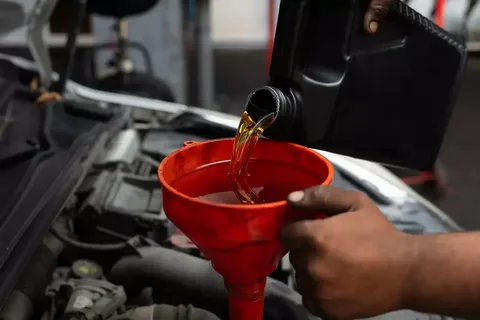
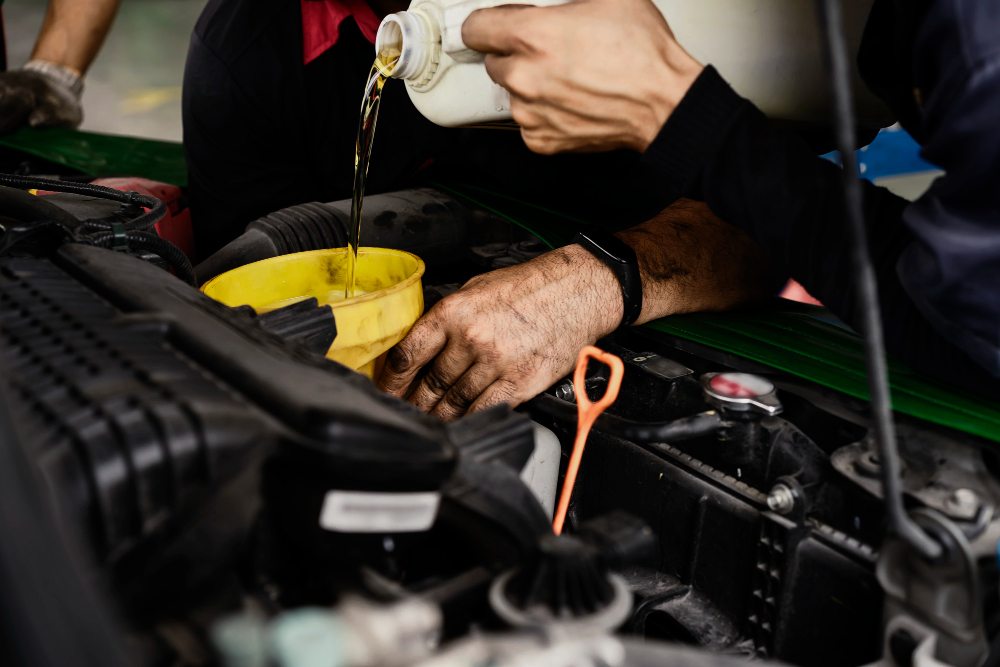
Your car may need an oil change if the oil-change or maintenance light comes on, the engine sounds louder than usual, the oil looks dark or gritty, or you have reached the service interval recommended by the manufacturer. The safest approach is to follow the mileage and time interval listed in your owner’s manual rather than waiting for obvious symptoms. Regular oil changes help lubricate engine components, control heat, and reduce harmful deposits.
Engine oil is easy to ignore because you rarely see it doing its job. Yet every time your engine runs, oil circulates through moving components to reduce friction, carry away heat, and help protect internal parts from wear.
As oil ages, its condition changes and contaminants accumulate. Waiting too long between oil changes may reduce lubrication and contribute to unnecessary engine wear.
So, how do you know if your car needs an oil change? Some vehicles tell you through an oil-life monitoring system, while others require you to keep track of mileage and time. There are also several warning signs that can indicate your oil service is overdue.
Why Does Your Car Need Regular Oil Changes?
Engine components move incredibly quickly and operate under high temperatures.
Without proper lubrication, metal parts would experience excessive friction and heat.
Engine oil helps:
- Lubricate moving parts
- Reduce friction
- Carry away heat
- Suspend contaminants
- Reduce deposit formation
- Protect against corrosion
- Support efficient engine operation
Your oil filter also traps contaminants circulating through the lubrication system.
Over time, both the oil and filter lose their effectiveness, which is why routine replacement is part of almost every vehicle’s maintenance schedule.
1. Your Oil Change or Maintenance Light Comes On
One of the clearest signs is an illuminated maintenance reminder.
Many modern vehicles have an oil-life monitoring system that estimates when an oil change is required based on factors such as:
- Mileage
- Engine operating conditions
- Temperature
- Driving patterns
- Trip duration
Depending on your vehicle, the dashboard may display:
- Oil Change Required
- Maintenance Required
- Service Due
- Oil Life 10%
- Oil Life 0%
Do not confuse a normal oil-service reminder with a red oil-pressure warning light.
A red oil-pressure warning may indicate insufficient oil pressure and can represent a more urgent mechanical problem.
2. You Have Reached the Recommended Oil Change Interval
You do not have to wait for a warning light.
Your owner’s manual should specify the recommended oil type and service interval for your engine.
Older advice often suggested changing oil every 3,000 miles, but that is not a universal rule for modern vehicles.
Depending on the vehicle, oil type, engine, and operating conditions, modern service intervals may be considerably longer.
Some cars may recommend oil changes around:
- 5,000 miles
- 7,500 miles
- 10,000 miles
- Or according to an oil-life monitoring system
Always follow the schedule for your specific make, model, engine, and model year.
3. The Engine Oil Looks Dark and Dirty
Fresh engine oil is typically amber or light brown, although appearance varies by product.
Oil usually becomes darker during normal engine operation.
Dark oil alone therefore does not automatically mean it must be replaced immediately.
However, oil that appears:
- Extremely dirty
- Thick
- Gritty
- Sludgy
- Contaminated
may indicate that service is overdue or that another engine issue should be investigated.
If your vehicle has a traditional dipstick, you can check the oil condition while also checking the level.
How to Check Engine Oil With a Dipstick
Park the vehicle on level ground and follow the checking procedure recommended by the manufacturer.
A typical process involves:
- Switching off the engine
- Allowing the oil to settle
- Removing the dipstick
- Wiping it clean
- Reinstalling it fully
- Removing it again
- Checking the oil level against the markings
If the level is below the recommended range, the engine may need oil added.
However, repeatedly needing to add oil should not simply be treated as routine maintenance.
It could indicate:
- An external oil leak
- Oil consumption
- Engine wear
- A gasket problem
- Another mechanical issue
4. Your Engine Sounds Louder Than Normal
Engine oil creates a protective film between moving metal components.
When oil becomes excessively old, contaminated, or too low, engine operation may become noisier.
You might hear:
- Ticking
- Tapping
- Knocking
- Increased mechanical noise
Do not assume an oil change will fix every engine noise.
Knocking or severe mechanical sounds can indicate more serious problems and should be professionally diagnosed.
But if your oil service is overdue and the engine sounds noticeably rougher or louder, checking the oil should be high on the list.
5. The Oil Level Keeps Dropping
A small amount of oil consumption can occur in some engines, particularly as vehicles age.
Rapid or frequent oil loss is different.
Check for:
- Oil spots where you park
- Wet areas around the engine
- Burning-oil smells
- Blue exhaust smoke
- Repeated low-oil warnings
If you continually top up the oil without identifying why it is disappearing, you are treating the symptom rather than the problem.
An inspection may reveal leaking seals, gaskets, or internal oil consumption.
6. You Smell Burning Oil
A burning-oil smell can occur when engine oil leaks onto hot components.
This may happen because of:
- Valve-cover gasket leaks
- Oil-filter leaks
- Drain-plug problems
- Spilled oil
- Other engine sealing issues
A burning smell is not simply a sign that you need routine maintenance.
If the odor is strong or accompanied by smoke, arrange an inspection promptly.
7. Your Engine Feels Rough or Performs Differently
An overdue oil change does not necessarily cause dramatic performance loss by itself, but neglected lubrication can contribute to poor engine condition over time.
You may notice:
- Rougher idle
- Increased engine noise
- Reduced smoothness
- Sluggish operation
These symptoms have many possible causes, including ignition, fuel, sensor, intake, and mechanical problems.
That is why proper diagnostics matter if changing the oil does not resolve the issue.
8. You Cannot Remember Your Last Oil Change
This one sounds painfully obvious, but it catches plenty of drivers.
If you cannot remember:
- When the oil was last changed
- What mileage the service occurred at
- Which oil was used
check your service records.
You may find information on:
- A windshield service sticker
- Digital maintenance records
- Dealership records
- Repair invoices
- Vehicle maintenance apps
If the service history is unknown—particularly on a recently purchased used car—having the oil and general maintenance condition inspected can establish a reliable starting point.
9. You Drive Under Severe Conditions
Some vehicles require more frequent maintenance under what manufacturers describe as severe operating conditions.
These may include repeated:
- Short journeys
- Stop-and-go traffic
- Extremely hot temperatures
- Extremely cold conditions
- Towing
- Heavy loading
- Dusty environments
- Long periods of idling
A five-mile urban journey can sometimes be harder on engine oil than a much longer highway trip because the engine may spend more time warming up and operating under stop-start conditions.
Check whether your owner’s manual lists a separate severe-service schedule.
How Often Should You Change Your Car’s Oil?
There is no single oil-change interval that applies to every vehicle.
Your correct schedule depends on:
- Manufacturer
- Model
- Engine
- Model year
- Oil specification
- Driving habits
- Climate
- Operating conditions
For many modern vehicles using synthetic oil, intervals can be longer than the old 3,000-mile rule.
However, that does not mean every vehicle should automatically go 10,000 or 15,000 miles between services.
Your manufacturer’s maintenance schedule should be the primary guide.
Time Matters as Well as Mileage
Drivers sometimes assume oil only deteriorates through mileage.
Time matters too.
If you drive only a few thousand miles per year, the vehicle may still have a time-based oil-change recommendation.
Oil can collect:
- Moisture
- Fuel contamination
- Combustion by-products
This can be particularly relevant for vehicles driven mostly on short trips.
So a low-mileage car is not necessarily a zero-maintenance car.
Does Synthetic Oil Last Longer?
Synthetic engine oils are designed to provide stable performance across demanding operating conditions and are commonly specified by modern manufacturers.
They often allow longer service intervals than older conventional oils when the vehicle manufacturer permits it.
However, simply switching to synthetic oil does not mean you can ignore the maintenance schedule indefinitely.
Always use oil that meets the:
- Correct viscosity
- Manufacturer specification
- Required performance standard
Using the wrong oil can be more problematic than saving a few dollars during an oil change.
What Happens If You Don’t Change Your Oil?
Missing an oil change by a small amount does not normally cause an engine to instantly fail.
Repeated neglect is the real concern.
Overextended oil can contribute to:
Increased Contamination
Combustion by-products and contaminants accumulate over time.
Sludge Formation
Severe oil neglect can allow deposits and sludge to develop inside the engine.
Increased Friction
Degraded lubrication can reduce protection between moving components.
Increased Engine Wear
Bearings, timing components, camshafts, pistons, and other parts rely on proper lubrication.
Reduced Engine Life
Long-term maintenance neglect can eventually contribute to expensive internal damage.
An oil change is inexpensive compared with an engine replacement. That particular bit of automotive mathematics is brutally simple.
Oil Change Light vs. Oil Pressure Light
Drivers often confuse these two warnings.
Oil Change Reminder
This normally indicates scheduled maintenance is due.
You generally have time to arrange service soon.
Oil Pressure Warning Light
This is much more serious.
A red oil-can symbol can indicate that the engine does not have adequate oil pressure.
If it remains illuminated while the engine is running, continuing to drive may risk severe engine damage.
Safely stop the vehicle and follow the manufacturer’s instructions rather than assuming you can simply drive another week until your next oil change.
Should the Oil Filter Be Changed With the Oil?
Generally, yes.
The oil filter captures contaminants circulating through the engine.
Installing fresh oil while leaving an old, contaminated filter in place usually defeats part of the purpose of the service.
A standard oil-change service normally includes:
- Draining old engine oil
- Replacing the oil filter
- Refilling with the correct oil
- Checking the oil level
- Resetting the maintenance indicator where applicable
A broader maintenance visit may include additional inspections.
What Else Should Be Checked During an Oil Change?
An oil service is a good opportunity to inspect other routine maintenance items.
Depending on the vehicle, technicians may check:
- Coolant
- Brake fluid
- Washer fluid
- Transmission fluid where appropriate
- Tire pressure
- Tire condition
- Belts
- Hoses
- Visible leaks
- Air filter
- Battery condition
- Brake components
For drivers of European and Asian import vehicles in Minneapolis, Uptown Imports provides oil changes, factory-recommended maintenance, diagnostics, and broader mechanical repair services, making routine oil service an opportunity to keep track of the vehicle’s overall condition.
Can You Change Your Own Engine Oil?
Yes, if you have:
- Appropriate tools
- Safe lifting equipment
- The correct oil
- The correct filter
- Suitable knowledge
- A way to dispose of used oil responsibly
However, several mistakes can create serious problems.
These include:
- Using incorrect oil
- Installing the wrong filter
- Overfilling the engine
- Underfilling the engine
- Damaging the drain plug
- Forgetting the drain plug
- Double-gasketing the oil filter
- Failing to check for leaks
If you are not comfortable performing the service correctly, professional oil changes are usually straightforward and relatively inexpensive.
How Do You Know What Oil Your Car Needs?
Do not guess based on whatever bottle happens to be on sale.
Check:
- Owner’s manual
- Oil-fill cap
- Manufacturer maintenance information
You may see viscosity grades such as:
- 0W-20
- 0W-30
- 5W-20
- 5W-30
- 5W-40
But viscosity is only part of the specification.
Certain European and Asian manufacturers also require oil meeting particular manufacturer approvals or performance standards.
Using the correct specification is particularly important for turbocharged, diesel, high-performance, and modern emissions-equipped engines.
Signs You May Need More Than an Oil Change
Sometimes drivers book an oil service only to discover another issue is responsible for their symptoms.
Professional diagnosis may be needed if you notice:
- Persistent low-oil warnings
- Heavy oil leaks
- Blue exhaust smoke
- Severe engine knocking
- Repeated overheating
- Low oil pressure
- Metal particles in the oil
- Oil mixed with coolant
- Milky residue on the dipstick
- Excessive oil consumption
Changing the oil alone will not repair a mechanical failure.
How to Avoid Missing Your Next Oil Change
Keeping track is simple once you establish a routine.
You can:
- Follow the vehicle’s oil-life monitor
- Record mileage after every service
- Save maintenance invoices
- Use a phone reminder
- Check your service sticker
- Keep digital vehicle records
- Follow the manufacturer’s maintenance schedule
Routine maintenance is much easier when you do not have to play detective every six months.
Final Thoughts
So, how do you know if your car needs an oil change? The best indicators are your vehicle’s oil-life monitor, maintenance schedule, mileage, time since the previous service, and any unusual symptoms involving oil level or engine operation.
Do not rely solely on oil color or the outdated assumption that every vehicle needs fresh oil exactly every 3,000 miles. Modern engines and oils vary significantly, so follow the specification and interval recommended for your particular vehicle.
Regular oil changes are one of the simplest forms of preventative maintenance. Staying on schedule helps keep engine components properly lubricated, reduces contamination, and gives technicians an opportunity to spot leaks or developing maintenance issues before they become considerably more expensive.


