
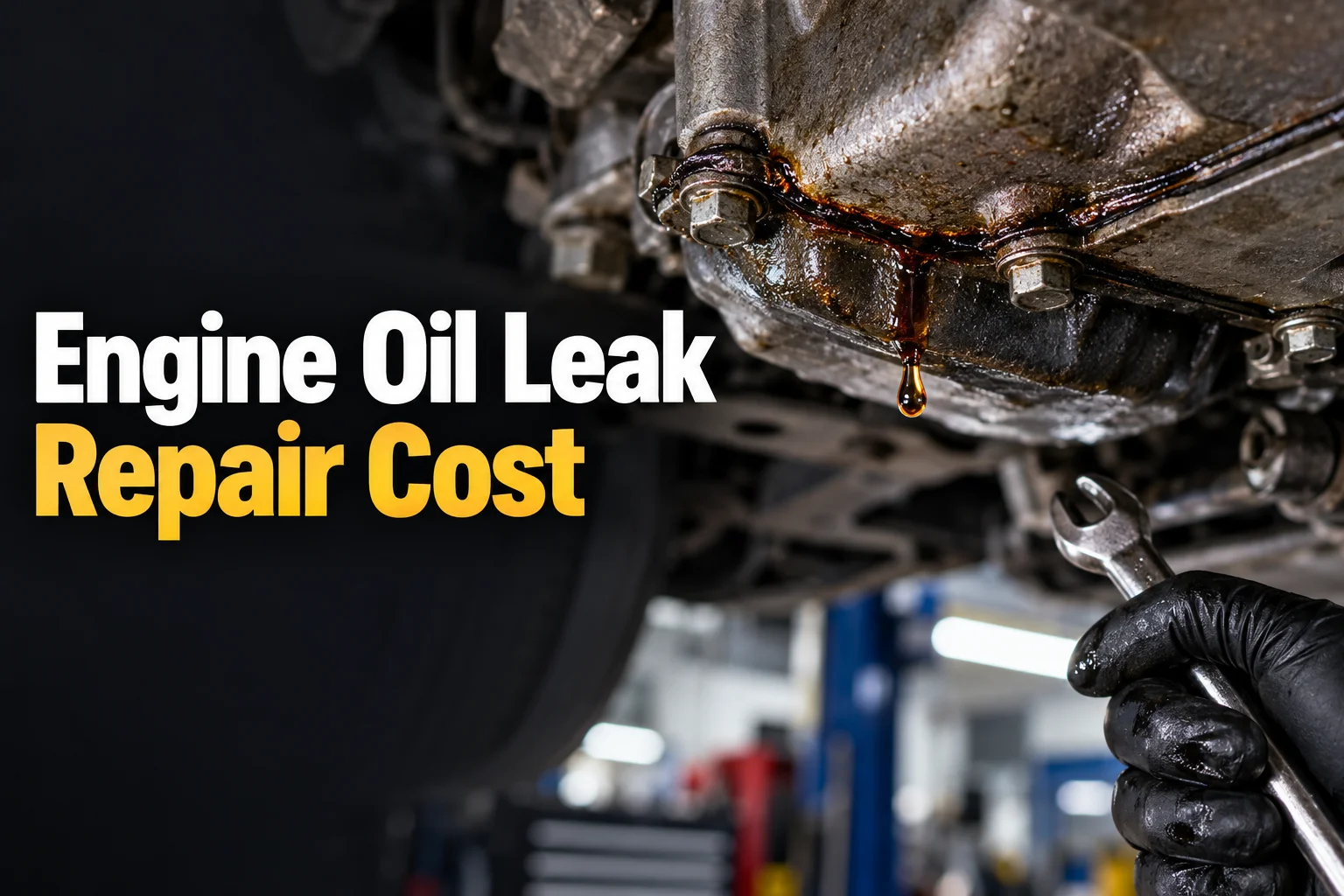
Engine oil leak repair typically costs between $150 and $1,500 or more, depending on the source of the leak, the vehicle’s make and model, labour rates, and the parts required. Minor repairs, such as replacing a drain plug washer or tightening a loose connection, may cost $20 to $150. Replacing a valve cover gasket often costs $150 to $500, while oil pan gasket repairs may range from $250 to $1,000. More complicated repairs, such as a rear main seal, can cost $600 to $2,000 or more. An accurate early diagnosis can help prevent expensive engine damage and unnecessary repairs.
Discovering an oil spot underneath your vehicle can be frustrating, especially when you are unsure how much the repair will cost. Engine oil leaks can develop gradually or appear suddenly, and the cost of fixing them varies considerably. A small leak around a drain plug may require only a simple adjustment, while oil leaking from a rear main seal or another hard-to-reach component can involve several hours of labor.
Understanding engine oil leak repair cost helps you prepare financially, recognize reasonable repair estimates, and decide when professional attention is necessary. It also helps you avoid ignoring a problem that could eventually lead to serious engine damage.
The cost of repairing an engine oil leak depends primarily on where the oil is escaping and how difficult the affected component is to access. Some repairs take less than an hour, while others require removing major engine or transmission components.
In the United States, many common engine oil leak repairs fall between $150 and $1,500. However, complicated jobs can exceed this range, particularly on vehicles with expensive parts or limited access to the leaking seal.
The following estimates provide a general guide to potential repair expenses.
Type of repair | Estimated cost |
Drain plug tightening or washer replacement | $20–$150 |
Oil filter replacement or resealing | $30–$150 |
Valve cover gasket replacement | $150–$500 |
Oil pressure sensor replacement | $100–$350 |
Oil filter housing gasket replacement | $150–$600 |
Timing cover gasket repair | $400–$1,500 |
Oil pan gasket replacement | $250–$1,000 |
Front crankshaft seal replacement | $200–$800 |
Rear main seal replacement | $600–$2,000+ |
Cylinder head gasket repair involving an oil leak | $1,000–$3,000+ |
These figures are general estimates, not guaranteed quotes. Actual prices vary by vehicle, engine configuration, repair facility, location, and the extent of the damage. Some vehicles may cost considerably more to repair than the ranges shown.
A mechanic should identify the exact leak source before recommending a repair. Oil can travel along engine surfaces, making a leak appear to originate somewhere other than the actual problem area.
Two vehicles can have similar oil leaks but very different repair bills. The following factors explain why prices vary so much.
The location of the leak is often the biggest factor in determining repair costs.
Leaks from accessible components, such as an oil filter or drain plug, are usually inexpensive to address. These parts can generally be inspected and serviced without removing major engine components.
Leaks from the valve cover gasket, oil pan gasket, or front crankshaft seal may require additional disassembly. The repair becomes more expensive when components must be removed to reach the damaged seal.
A rear main seal is a good example. It sits between the engine and transmission, so replacing it often requires separating these components. Even when the seal itself is inexpensive, the labor can make the total repair costly.
The vehicle you drive has a direct effect on parts availability, repair procedures, and labor requirements.
Some domestic vehicles have relatively straightforward engine layouts that let mechanics easily access common gaskets. Certain European and luxury vehicles, however, have tightly packed engine compartments or specialised components that require additional work.
For example, an oil leak on a vehicle with a complicated oil filter housing may involve removing intake components or other surrounding parts. A similar leak on a different vehicle might require much less labor.
Specialised parts can also increase expenses. If your vehicle requires an original equipment manufacturer component or a specific gasket assembly, the replacement part may cost more than a standard aftermarket alternative.
Labor is a significant part of many engine oil leak repairs.
Auto repair shops across the United States charge different hourly rates based on location, technician experience, equipment, and operating expenses. A shop in a major metropolitan area may charge more than a facility in a smaller town.
The estimated repair time also matters. Replacing an accessible gasket might take one or two hours, while replacing a rear main seal can require several hours of work.
When comparing estimates, look at the expected labor hours as well as the hourly rate. A higher hourly rate does not automatically mean a higher final bill if the technician can complete the repair efficiently.
Replacement parts vary in price depending on the component and vehicle.
A basic rubber gasket or sealing washer may be inexpensive. A complete oil filter housing assembly, specialized seal, or timing cover gasket kit can cost considerably more.
Some repairs also require additional materials, including engine oil, an oil filter, sealant, replacement bolts, and cleaning supplies.
Ask whether the estimate includes all necessary parts and fluids. This makes it easier to understand the total cost before approving the work.
An oil leak sometimes indicates a larger maintenance issue.
For example, excessive crankcase pressure caused by a malfunctioning positive crankcase ventilation (PCV) system can contribute to oil leaks. Replacing a gasket without addressing the underlying pressure problem may allow the leak to return.
Similarly, an engine that has been running with insufficient oil may experience damage that extends beyond the original leak.
If a mechanic discovers worn seals, damaged threads, a cracked housing, or another related problem, the final repair cost may increase. A proper diagnosis helps distinguish necessary repairs from optional maintenance.
Understanding the most common leak sources can help you recognize what your mechanic may find during an inspection.
The valve cover gasket seals the area between the valve cover and the cylinder head. Over time, heat and repeated engine cycles can cause the gasket to harden, shrink, or crack.
Common symptoms include oil around the top of the engine, a burning oil smell, and smoke near the engine compartment when leaking oil contacts hot components.
Replacing a valve cover gasket generally costs $150 to $500, although some engines require more extensive work.
If the leak is left untreated, oil may reach ignition components or other nearby parts, potentially causing additional problems.
The oil pan sits beneath the engine and stores the engine oil. A gasket or sealing material prevents oil from escaping where the pan meets the engine block.
Age, heat, road debris, and improper installation can damage this seal. Oil may collect around the lower engine or form spots beneath the vehicle.
Oil pan gasket replacement often costs $250 to $1,000. Some vehicles are more expensive because surrounding components must be removed or the engine needs additional support to access the pan.
It is important to distinguish a leaking gasket from a damaged oil pan. If the pan is cracked or its threads are damaged, replacing the pan may be necessary.
Oil filters and drain plugs are common sources of leaks, especially after an oil change.
A loose drain plug, worn sealing washer, improperly installed oil filter, or damaged filter gasket can allow oil to escape. An oil filter gasket may also leak if the old gasket sticks to the engine and the new filter is installed over it.
These problems are often relatively inexpensive to fix, typically costing $20 to $150 depending on the cause and whether fresh oil is required.
However, a major leak from a loose filter or drain plug can cause rapid oil loss. If you notice substantial leaking after an oil change, stop driving and have the vehicle inspected.
The front crankshaft seal helps prevent oil from escaping around the crankshaft at the front of the engine.
When the seal wears out, oil may appear near the crankshaft pulley or behind the timing cover. Repair costs commonly range from $200 to $800, depending on accessibility and engine design.
Some engines require removing belts, pulleys, or timing components to replace the seal. If the timing belt becomes contaminated with engine oil, additional repairs may be necessary.
The rear main seal prevents oil from escaping where the crankshaft exits the rear of the engine.
Because this seal is located between the engine and transmission, access can be difficult. Many vehicles require transmission removal, which significantly increases labor costs.
A rear main seal repair may cost $600 to $2,000 or more. The exact price depends on the vehicle, drivetrain configuration, and other work required.
Oil near the junction between the engine and transmission can suggest a rear main seal leak, but it does not confirm one. Oil from other sources can run down the engine and collect in the same area.
Some engines use an oil filter housing that connects to the engine through one or more gaskets. These seals can deteriorate with age and exposure to heat.
A leaking housing gasket may leave oil around the filter housing, the side of the engine, or nearby components. Depending on the vehicle, oil may also reach belts or electrical connectors.
Repair costs often range from $150 to $600, although replacing a damaged housing assembly can increase the price.
Prompt repairs are particularly important when leaked oil can reach components that are not designed to contact engine fluids.
An oil pressure sensor monitors the engine’s lubrication system. If its seal fails or the sensor body develops a leak, engine oil can escape around the sensor.
Replacing the sensor may cost approximately $100 to $350, depending on its location and the vehicle’s design.
If the oil pressure warning light appears, do not assume the problem is only a faulty sensor. Actual low oil pressure can cause serious engine damage. Stop the engine when it is safe to do so and arrange an inspection.
The timing cover protects components responsible for coordinating engine operation. A gasket or sealing surface helps prevent oil from escaping around the cover.
A leak in this area can be more expensive to repair because the technician may need to remove belts, pulleys, accessories, or timing components.
Repair costs can range from $400 to $1,500 or more. The design of the engine and the extent of disassembly required have a major effect on the total.
Not every oil leak begins with a damaged gasket. Excessive pressure inside the crankcase can force oil past seals that would otherwise remain functional.
A blocked or malfunctioning PCV system is one possible cause. Engine wear can also contribute to excessive blow-by and pressure.
The repair cost depends on the underlying problem. A relatively simple PCV system repair may cost less than replacing several leaking seals.
A qualified mechanic should investigate the cause instead of replacing multiple gaskets without confirming why the leaks developed.
Identifying a leak early can help you avoid more expensive repairs.
Watch for these common warning signs:
The color and location of a stain can provide clues, but they are not enough to identify the exact source. A mechanic may need to clean the engine, inspect it under operating conditions, or use an approved fluorescent dye to trace the leak.
An accurate diagnosis is essential because replacing the wrong component wastes money and may leave the original problem unresolved.
The technician checks the engine, oil filter, drain plug, valve cover, oil pan, and other common leak points for fresh oil residue.
The mechanic verifies the engine oil level and looks for signs of significant oil loss. If the level is low, the engine may need the correct oil added before further testing, provided there is no reason to suspect unsafe operation.
Old oil can spread across engine surfaces and make the source difficult to identify. Cleaning the area allows the technician to observe where fresh oil appears.
If the source remains unclear, the shop may use an ultraviolet dye compatible with the engine oil or another appropriate diagnostic method. This helps trace the leak back to its origin.
Once the source has been identified, the technician should explain the necessary repair, estimated labor, replacement parts, and any additional work that may be required.
A professional shop such as Uptown Import can help drivers understand the importance of accurate diagnosis and timely maintenance when dealing with engine-related concerns.
Although some leaks require expensive repairs, a few practical steps can help you avoid unnecessary spending.
A minor leak may be relatively inexpensive to fix. Waiting until the oil level drops repeatedly can increase the risk of engine damage and turn a small repair into a much larger expense.
Regular oil changes and inspections can help identify worn seals, loose connections, and other developing problems.
Always use the oil specification and viscosity recommended by your vehicle manufacturer. Incorrect oil or unsuitable additives are not reliable substitutes for repairing a leak.
Ask your repair shop to separate labor, parts, fluids, diagnostic charges, and applicable taxes. An itemized estimate makes it easier to understand what you are paying for and compare quotes fairly.
Oil residue can spread from one area to another. Before paying for a major gasket replacement, ask the mechanic how the leak was identified and whether other possible sources were ruled out.
Depending on the vehicle, you may have a choice between original equipment manufacturer parts and reputable aftermarket components. Ask about quality, warranty coverage, and compatibility rather than selecting a part based on price alone.
Stop-leak additives may be marketed as an easy solution, but they do not reliably repair every type of leak and may not be appropriate for every engine. A damaged gasket, cracked housing, or failed seal often needs a proper mechanical repair.
Whether it is safe to drive depends on how severe the leak is and whether the engine maintains adequate oil pressure.
A very small seep may not cause an immediate emergency, but it still needs inspection. Oil can accumulate on other components, leak onto hot exhaust parts, or worsen without much warning.
You should stop driving and arrange professional assistance if:
If you suspect the oil level is dangerously low, do not continue driving simply to reach a repair shop. Follow the vehicle manufacturer’s instructions and arrange towing when necessary.
Never crawl beneath a vehicle supported only by a jack. An inspection underneath the car should be performed with appropriate lifting equipment and safety precautions.
Coverage depends on your vehicle’s warranty terms, age, mileage, maintenance history, and the leak’s cause.
A manufacturer warranty may cover certain defects in materials or workmanship, subject to its exclusions and conditions. An extended vehicle service contract may also cover specific engine seals or gaskets, but coverage varies significantly by plan.