
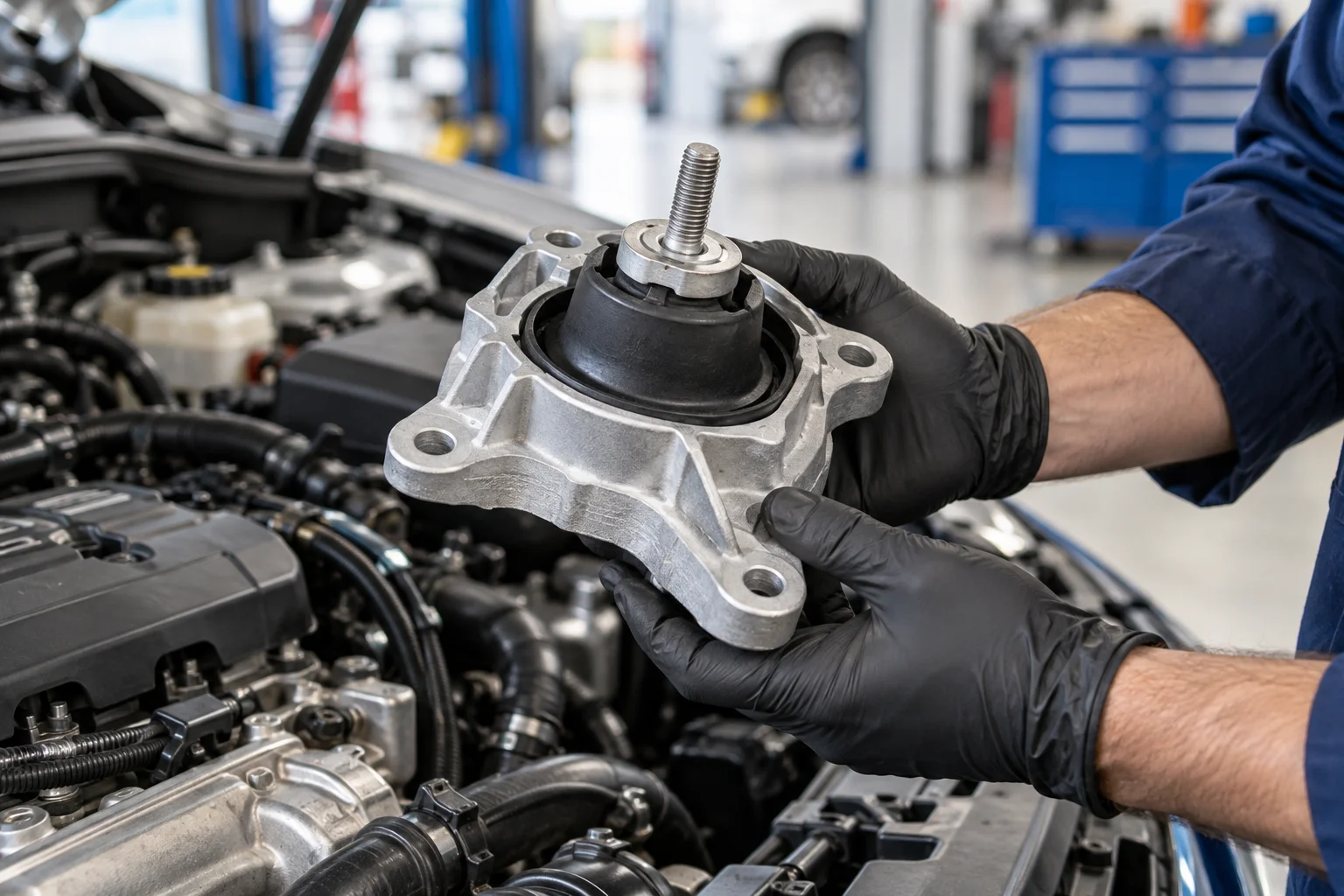
Engine mount repair or replacement typically costs between $250 and $800 per mount, including parts and labor, although some vehicles may cost more. Replacing multiple mounts can bring the total to $500 to $1,500 or more, depending on the vehicle’s make, model, and engine configuration. Delaying repairs can increase vibration, damage nearby components, put additional stress on other mounts, and potentially lead to more expensive repairs. Addressing a worn engine mount early can help maintain vehicle stability, reduce unnecessary wear, and prevent further mechanical problems.
Your vehicle’s engine produces considerable movement and vibration while running. Engine mounts help control that movement, keep the engine securely positioned, and reduce the amount of vibration transferred into the cabin. Although these components are designed to withstand years of use, they can deteriorate over time because of heat, engine movement, road conditions, and normal wear.
When an engine mount becomes damaged, you may notice unusual vibrations, clunking sounds, or excessive engine movement during acceleration. These symptoms might seem minor initially, but ignoring them can lead to additional mechanical problems and higher repair expenses.
Understanding engine mount repair cost helps you prepare for necessary maintenance and make informed decisions about your vehicle. The total cost depends on the type of mount, the number of mounts requiring replacement, labor rates, and how difficult the components are to access.
An engine mount is a component that secures the engine to the vehicle’s frame or subframe. Most vehicles use several mounts to support the engine and control movement caused by acceleration, braking, and changes in engine speed.
Engine mounts typically contain rubber, metal, or a combination of materials designed to absorb vibration and movement. Some modern vehicles also use hydraulic or electronically controlled mounts to improve comfort and vibration control.
A properly functioning engine mount performs several important jobs:
When a mount wears out, cracks, leaks, or separates from its mounting points, it may no longer perform these functions effectively.
Engine mount repair cost varies according to the vehicle and the amount of work required. In many cases, the repair involves replacing the damaged mount rather than repairing the existing component.
For common passenger vehicles in the United States, replacing one engine mount may cost approximately $250 to $800. Some straightforward repairs may fall below this range, while luxury vehicles and difficult installations can cost significantly more.
The following table provides general estimates for different repair situations.
Repair type | Estimated total cost |
Basic rubber engine mount replacement | 150–400 |
Standard engine mount replacement | 250–800 |
Hydraulic engine mount replacement | 300–900 |
Active or electronically controlled mount replacement | 400–1,200+ |
Multiple engine mounts replacement | 500–1,500+ |
Engine and transmission mount replacement together | 500–1,500+ |
Luxury vehicle engine mount replacement | 500–1,500+ |
These are approximate budgeting ranges, not fixed prices. The actual cost depends on the vehicle’s design, parts availability, shop labor rates, and whether other components need attention.
For example, a mount that is easily accessible from above the engine may be relatively inexpensive to replace. A mount located beneath the engine or behind other components may require additional labor and specialized equipment.
Several factors determine how much you will pay to replace a damaged engine mount.
The make and model of your vehicle have a direct effect on parts prices and repair procedures.
Popular vehicles may have widely available aftermarket replacement mounts, which can help keep parts costs manageable. Luxury vehicles and less common models may require specialized components that cost considerably more.
Some vehicles also have complicated engine layouts that make the mounts difficult to reach. In these cases, the technician may need to remove surrounding components or support the engine carefully during the repair.
Before approving the work, ask your mechanic whether the estimate includes the correct mount for your exact vehicle and engine configuration.
Not all engine mounts are built the same way.
Rubber engine mounts: These are common in many vehicles and use rubber to absorb vibration. They are often among the less expensive options.
Hydraulic engine mounts: These contain fluid to improve vibration absorption. They can be more expensive to replace than basic rubber mounts.
Active engine mounts: Some vehicles use electronically controlled systems that adjust vibration control according to engine operating conditions. These mounts may cost more because of their specialized construction.
The appropriate replacement depends on the vehicle manufacturer’s design. Installing an unsuitable mount can affect comfort, vibration control, or fitment.
Labor is often a substantial part of an engine mount replacement bill.
Repair shops charge different hourly rates depending on location, technician experience, and operating expenses. The time required also varies by vehicle.
A straightforward mount replacement may take around one to two hours. More complicated installations can take several hours or longer, especially if surrounding components must be removed.
Ask the shop for the estimated labor hours and hourly rate. This will help you understand why two repair facilities may provide different quotes for the same job.
Vehicles typically use multiple mounts, and not every mount necessarily wears out at the same time.
If only one mount has failed, replacing that component may be sufficient. However, if several mounts are worn, replacing them together may be more practical because the technician may already have access to the relevant areas.
Your mechanic should inspect the other mounts before recommending additional replacements. There is no universal rule that every mount must be replaced whenever one fails.
A severely damaged engine mount can place extra stress on nearby components. Depending on the vehicle, excessive movement may affect exhaust connections, hoses, wiring, or other mounting hardware.
If the technician discovers damaged components during the inspection, the repair bill may increase.
This is one reason why addressing a failing mount early can be beneficial. A relatively straightforward replacement may become more involved if the problem is allowed to continue.
Delaying engine mount repairs may initially appear to save money, but a damaged mount can allow excessive engine movement and increase stress on other components.
The consequences depend on the severity of the damage, the type of mount, and how the vehicle is driven.
One of the earliest signs of a failing engine mount is increased vibration inside the vehicle.
You may feel shaking through the steering wheel, seats, floor, or dashboard, particularly when the engine is idling. The vibration may become more noticeable when the air conditioning is running or when the engine is under additional load.
As the mount deteriorates further, its ability to absorb normal engine movement decreases.
Although vibration can also result from misfires, worn suspension components, or other mechanical issues, a damaged mount should be considered when symptoms are consistent with excessive engine movement.
Ignoring the problem can make everyday driving less comfortable and may indicate that the mount needs prompt attention.
When one engine mount becomes weak or breaks, the remaining mounts may experience greater movement and uneven loading.
This does not mean the other mounts will automatically fail, but the additional stress can contribute to further wear, particularly if they are already deteriorated.
If several mounts eventually require replacement, the overall repair cost may be substantially higher than replacing one damaged mount earlier.
A professional inspection can help determine whether the other mounts remain in good condition or need replacement.
Engine mounts help keep the engine in its intended position. When a mount fails, excessive movement can place additional stress on components connected to the engine.
Depending on the vehicle’s layout and the severity of the failure, this movement may strain coolant hoses, electrical wiring, intake connections, and other flexible components.
In some cases, excessive movement can damage or disconnect a connection, potentially leading to additional mechanical or electrical problems.
Not every failed mount causes this type of damage, but the risk increases when the engine is allowed to move beyond its normal range.
The engine and exhaust system are connected through components designed to accommodate a certain amount of movement.
A severely damaged engine mount can increase stress on exhaust connections, brackets, and flexible sections. In some vehicles, this may contribute to rattling, unusual exhaust noises, or damaged connections.
If an exhaust component develops a leak, exhaust gases may enter areas where they should not be present.
Never ignore exhaust fumes inside the passenger cabin. Stop driving when it is safe to do so and have the vehicle inspected immediately.
A failing mount may allow the engine to move excessively when you accelerate, release the accelerator, shift gears, or move between drive and reverse.
This movement can produce a clunking or banging sound as components shift under load.
The noise may initially occur only during certain driving conditions. As the mount deteriorates, it can become more frequent or pronounced.
These sounds are not exclusive to engine mounts. Transmission problems, suspension wear, and loose components can produce similar noises, so an accurate diagnosis is important.
Engine mounts are designed partly to isolate the passenger compartment from engine vibration.
When the mounts fail, vibration and noise can become more noticeable inside the cabin. You may experience a rough idle, dashboard rattling, or unpleasant shaking when stopped at a traffic light.
Although these symptoms may not immediately affect the vehicle’s ability to move, they can make driving less comfortable and indicate a developing mechanical problem.
Replacing a damaged mount can restore much of the vibration isolation, provided there are no other underlying issues.
Engine and transmission mounts work together to support the powertrain and control movement.
When an engine mount fails, the resulting movement can place additional stress on related mounting points and drivetrain connections. Depending on the vehicle, this may affect how movement is felt during acceleration or gear changes.
However, a bad engine mount does not automatically mean the transmission is damaged. Harsh shifting can also result from transmission faults, worn mounts, or other problems.
A technician should inspect the complete mounting system before recommending expensive drivetrain repairs.
The most important financial consequence of delaying engine mount repairs is the possibility of additional damage.
If a mount is replaced while the problem is limited to that component, the repair may be relatively straightforward. If excessive movement damages surrounding parts or contributes to additional mount failures, more work may be necessary.
For example, a repair that initially requires one replacement mount could become a larger job if other mounts or related components deteriorate.
Early repairs cannot guarantee that every future expense will be avoided, but they can reduce the chance of a known problem becoming more complicated.
Recognizing the warning signs can help you decide when to schedule an inspection.
If your vehicle shakes more than usual while stopped, a worn engine mount may be responsible. The vibration may be more noticeable when the engine is running at low speed.
However, rough idling can also result from ignition problems, fuel delivery issues, or engine misfires.
A damaged mount may allow the engine to shift when you press the accelerator. This movement can produce a clunking noise, particularly when transitioning between acceleration and deceleration.
If an engine mount has failed severely, the engine may move more than expected under changing loads. A technician can inspect this safely using appropriate procedures and equipment.
Do not attempt to place your hands near a running engine or its moving components to check for movement.
Vehicles with automatic or manual transmissions may produce a clunk when shifting if the powertrain is moving excessively.
Although a bad mount is one possible explanation, transmission and drivetrain problems should also be considered.
Rubber mounts may show cracks, separation, or deterioration. Hydraulic mounts can sometimes leak fluid when their internal seals fail.
Visible damage is a useful warning sign, but a mount can also fail internally without obvious external damage.
A proper diagnosis helps ensure that the repair addresses the actual problem.
The technician will ask when the vibration or noise occurs. Symptoms during idling, acceleration, braking, or gear changes can help narrow down the possible causes.
The mechanic examines the engine and transmission mounts for cracks, separation, leaking fluid, damaged hardware, and other signs of wear.
Using the appropriate workshop procedures, the technician evaluates whether the engine moves excessively under controlled conditions.
This test must be performed safely because moving engine components can create serious hazards.
Engine misfires, rough idle, exhaust issues, worn suspension components, and transmission faults can produce symptoms similar to those of a bad mount.
The technician may need additional testing to distinguish between these problems.
Once the faulty mount has been identified, the shop should explain the recommended replacement, parts costs, labor, and any related issues requiring attention.
A clear estimate helps you understand the expected expense before approving the repair.
Although engine mount replacement is sometimes unavoidable, you can take practical steps to manage the cost.
Address warning signs early. Schedule an inspection when you first notice unusual vibration or clunking rather than waiting until the symptoms become severe.
Compare itemized estimates. Ask different qualified repair shops to explain their parts, labor, and warranty charges. Compare the proposed work rather than choosing solely on the lowest price.
Use suitable replacement parts. Original equipment manufacturer and reputable aftermarket mounts may both be appropriate, depending on the vehicle. Confirm compatibility and quality before making a decision.
Inspect related mounts. Ask your mechanic to check the remaining mounts so you understand their condition. Replace additional mounts when justified by their wear or the manufacturer’s repair guidance.
Follow recommended maintenance. Regular vehicle inspections can help identify deterioration and other developing problems before they become more expensive.
Drivers looking for professional automotive assistance can consult Uptown Import for guidance on vehicle maintenance and the importance of addressing engine-related concerns before they worsen.
Whether you can continue driving depends on the severity of the damage.
A mount showing early signs of wear may not immediately prevent the vehicle from operating, but it should be inspected promptly. A severely damaged or separated mount can allow excessive engine movement and may create a safety concern.
Stop driving and arrange professional assistance if you notice severe engine movement, loud banging, damaged hoses or wiring, or other symptoms suggesting that the powertrain is no longer securely supported.
Avoid aggressive acceleration, sudden changes in engine load, and unnecessary trips until the problem has been assessed.
Do not rely on a visual inspection alone to determine whether a mount is safe. Some failures are not obvious without a proper examination.
In most cases, a damaged engine mount is replaced rather than repaired. The rubber, hydraulic, or active components are designed to function as an assembly, and attempting to repair a failed mount may not restore its original performance or safety.
The best replacement option depends on the vehicle, the mount’s design, and the manufacturer’s recommendations.
If one mount has failed, the remaining mounts should be inspected to determine whether they are still serviceable. Replacing every mount is not always necessary, but installing a new mount alongside severely worn mounts may not provide the best long-term result.
Ask your mechanic to explain the condition of each mount and why the proposed repair is appropriate.
Engine mount repair cost generally ranges from a few hundred dollars for a straightforward replacement to more than $1,500 when multiple mounts or complex components are involved. The exact price depends on the vehicle, mount design, labor requirements, and extent of any related damage.
Delaying repairs can lead to increased vibration, clunking noises, additional stress on other mounts, and possible damage to nearby components. While these consequences are not inevitable, ignoring a confirmed failure can make the problem more complicated and expensive.
If you notice unusual engine movement, persistent vibration, or clunking during acceleration, arrange a professional inspection. Early diagnosis, suitable replacement parts, and a clear repair estimate can help protect your vehicle and prevent unnecessary expenses.