
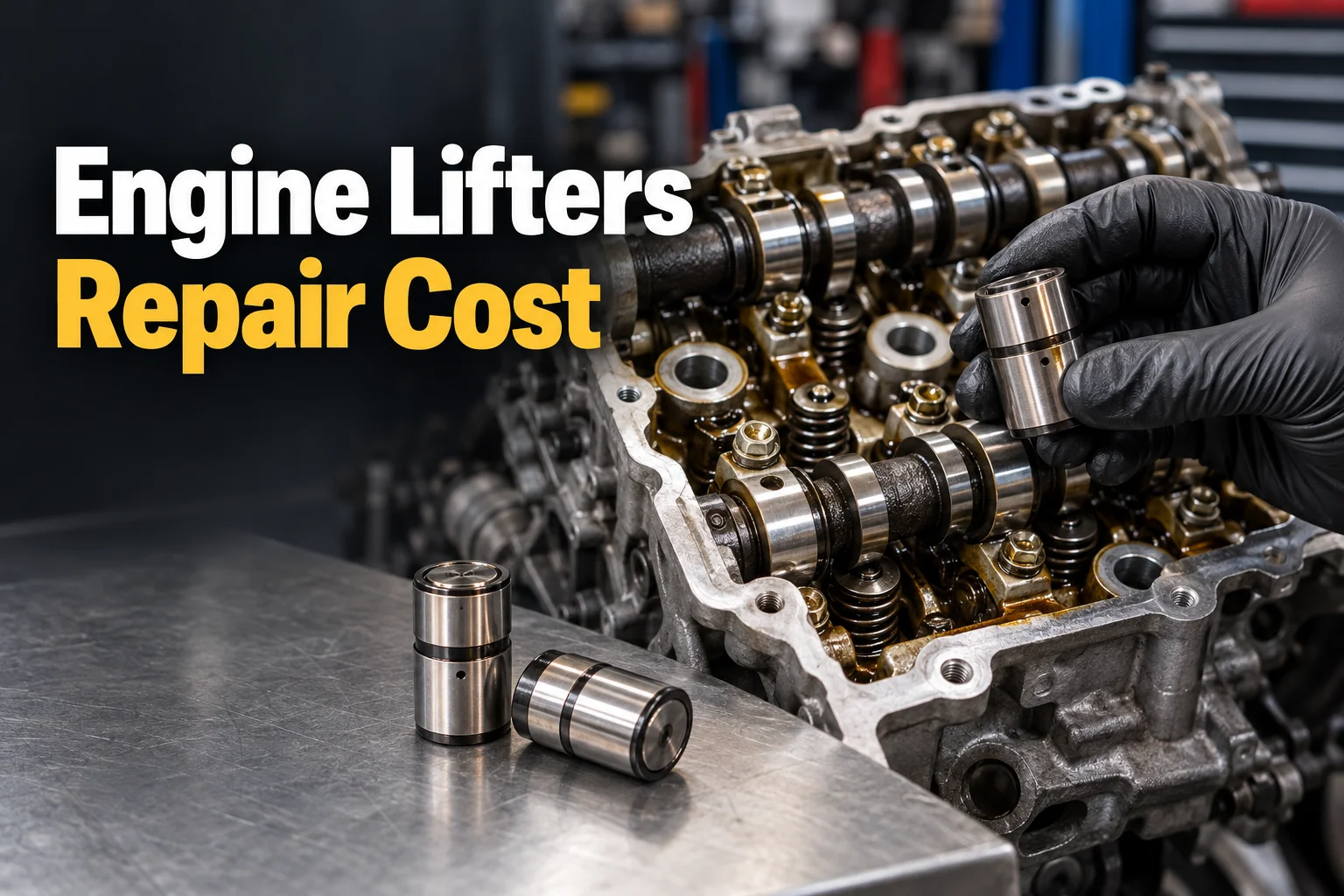
Engine lifter repair or replacement typically costs between $500 and $2,500 in the United States, depending on the vehicle, engine type, number of lifters being replaced, and labor requirements. Smaller four-cylinder engines may cost around $500 to $1,200, while V6 engines can range from $700 to $1,800. V8 engines, particularly those with complex valvetrain systems, may cost $1,000 to $2,500 or more. Luxury vehicles and trucks with hard-to-access lifters can cost more than these estimates. An early diagnosis can help prevent additional engine damage and reduce overall repair expenses.
Engine lifters play an important role in your vehicle’s engine performance. Although these components are relatively small, they help control valve movement and ensure the engine’s valvetrain operates correctly. When a lifter wears out, gets damaged, or clogs, it can cause ticking noises, rough idling, reduced engine performance, and other mechanical problems.
One of the biggest concerns for drivers is the cost of repairing or replacing faulty engine lifters. The total expense can vary significantly depending on the vehicle’s make and model, engine configuration, replacement parts, and the amount of labor required.
For example, replacing lifters in a four-cylinder engine may cost less than the same repair on a V8 truck engine. Some engines allow technicians to access the lifters relatively easily, while others require extensive disassembly to reach the affected components.
Engine lifters, also called tappets in some applications, are components of the valvetrain. Their primary job is to transfer movement from the camshaft to the pushrods or valves, depending on the engine design.
In engines with hydraulic lifters, internal oil pressure helps maintain proper clearance between moving valvetrain components. This reduces excessive noise and supports smooth engine operation.
Mechanical or solid lifters work differently and may require periodic valve clearance adjustments, depending on the engine.
When an engine lifter becomes worn or fails, the affected valve may not open and close as intended. This can affect combustion, engine efficiency, and overall performance.
Common symptoms of faulty engine lifters include:
These symptoms do not automatically confirm a faulty lifter. Low oil pressure, incorrect oil viscosity, worn rocker arms, damaged pushrods, and other valvetrain problems can produce similar noises. A proper diagnosis is important before replacing parts.
Engine lifter replacement costs vary according to engine design, labor time, parts availability, and whether additional components need replacement.
The following table provides general estimates for common vehicle categories in the United States.
Vehicle or engine type | Estimated total repair cost |
Compact cars with four-cylinder engines | 500–1,200 |
Midsize sedans with four-cylinder engines | 500–1,300 |
V6 sedans and crossovers | 700–1,800 |
V6 SUVs | 800–2,000 |
V8 pickup trucks | 1,000–2,500+ |
Full-size SUVs with V8 engines | 1,000–2,800+ |
Luxury European vehicles | 1,200–3,500+ |
High-performance vehicles | 1,500–4,000+ |
These figures are broad budgeting estimates for potential lifter replacement, not guaranteed prices or verified quotes for every vehicle. Some engines cost less to repair, while others require substantially more work. The estimates may also change if the camshaft, cylinder head, or other components are damaged.
Four-cylinder engines are common in compact cars, family sedans, and smaller SUVs. Many are relatively straightforward to service, although repair difficulty depends on the engine’s specific design.
The estimated cost of replacing engine lifters in a four-cylinder vehicle is generally $500 to $1,300.
The total typically includes replacement parts, technician labor, and necessary engine oil or other service materials. A simple repair involving accessible components may cost less than a repair requiring substantial disassembly.
Some modern four-cylinder engines use specialized valvetrain designs that can increase labor time. Parts prices also vary between mainstream vehicles and models that require specialized components.
If your four-cylinder engine develops a ticking noise, a mechanic should first check the oil level, oil condition, and oil pressure before recommending lifter replacement.
V6 engines are found in midsize sedans, SUVs, minivans, and many pickup trucks. Their lifter replacement costs are often higher than those of simpler four-cylinder engines because of their construction and the additional labor some designs require.
A typical estimated cost is $700 to $1,800, although some applications may exceed this range.
The number of affected lifters, access to the cylinder heads, and the engine’s valvetrain configuration all influence the final bill.
In certain V6 engines, the technician may need to remove intake components or other surrounding parts before reaching the lifters. Additional work may also be necessary if the camshaft or related components show excessive wear.
Before approving a major repair, ask the shop whether the estimate covers all required lifters, replacement gaskets, engine oil, and any necessary follow-up work.
V8 engines are common in full-size pickup trucks, performance vehicles, and larger SUVs. Their repair costs can be higher because they have more cylinders and may use complex valvetrain systems.
Replacing engine lifters in a V8 truck can cost approximately $1,000 to $2,500 or more.
Certain V8 engines use systems designed to deactivate selected cylinders under specific driving conditions. These systems can involve specialized lifters and related components, making diagnosis and repairs more complicated.
Labor costs may increase when technicians need to remove the intake manifold, cylinder heads, or other engine components. If a faulty lifter has damaged the camshaft, replacing only the lifter may not resolve the problem.
Truck owners should also consider the vehicle’s mileage, maintenance history, and overall condition when deciding whether to complete an extensive engine repair.
SUVs use a variety of engine configurations, including four-cylinder, V6, and V8 engines. Consequently, there is no single repair price that applies to every SUV.
For many V6 SUVs, lifter replacement may cost $800 to $2,000. Larger SUVs equipped with V8 engines may cost $1,000 to $2,800 or more.
Engine accessibility is an important consideration. Some SUVs have crowded engine compartments that make it harder for technicians to remove and reinstall components.
The availability of replacement parts can also affect the total expense, particularly for older or specialized models.
If you hear a persistent ticking sound while driving your SUV, avoid assuming that the lifters are automatically responsible. An experienced technician can distinguish valvetrain noise from other engine sounds and recommend the appropriate repair.
Luxury vehicles often use advanced engine designs and specialized components. These features can improve performance and refinement, but they may also increase maintenance and repair expenses.
Engine lifter replacement for a luxury vehicle can range from approximately $1,200 to $3,500 or more.
Some European vehicles require specialized diagnostic equipment, manufacturer-specific parts, and additional disassembly to access the valvetrain.
Labor rates at dealerships and specialized repair facilities may also be higher than those at general repair shops. However, a shop’s experience with a particular engine can be just as important as its hourly rate.
When comparing estimates, consider the technician’s expertise, the quality of the replacement parts, and the warranty offered on the work.
High-performance vehicles may have sophisticated valvetrain systems designed to support high engine speeds and increased power output.
Replacing lifters in these vehicles can cost $1,500 to $4,000 or more, depending on the engine and extent of the damage.
Some performance engines require precise assembly procedures, specialized parts, and additional inspections. If a failed lifter has damaged the camshaft or other internal components, the repair can become considerably more expensive.
Owners should avoid continuing to drive a high-performance vehicle with severe ticking, misfires, or warning lights until the cause has been identified.
Using the correct engine oil and following the manufacturer’s maintenance schedule can help support proper lubrication and reduce avoidable wear.
Several factors determine how much you will pay to repair or replace engine lifters.
Hydraulic lifters, solid lifters, and specialized lifters used in certain variable-valve or cylinder-deactivation systems have different designs and service requirements.
The correct replacement component depends on the engine. Parts should always be selected according to the vehicle manufacturer’s specifications.
The repair price depends on whether the problem affects one lifter or several.
However, replacing one lifter is not always the most economical solution. If several lifters are worn or the manufacturer specifies additional related work, replacing multiple components may be more appropriate.
A technician should explain why the recommended repair is necessary rather than assuming every lifter needs replacement.
Labor is often one of the largest parts of the repair bill.
Some engines allow relatively straightforward access to the lifters. Others require removal of the intake manifold, cylinder heads, or additional engine components.
Because repair procedures vary, ask for an estimate that lists the expected labor hours and hourly rate.
Original equipment manufacturer parts, aftermarket components, and specialized performance lifters can have different prices.
The least expensive part is not necessarily the best choice. Consider compatibility, reliability, manufacturer recommendations, and warranty coverage.
A faulty lifter can sometimes damage the camshaft or related valvetrain components, particularly if the engine continues operating with inadequate lubrication or a mechanical failure.
If additional components require replacement, the total cost may increase significantly.
This is why early diagnosis can be valuable. Identifying the problem before further damage occurs may reduce the scope of the repair.
Understanding the difference between parts and labor helps you evaluate a repair estimate.
Expense | General cost consideration |
Replacement lifters | Depends on engine type and quantity |
Gaskets and seals | Depends on the components removed |
Engine oil and filter | May be required after repair |
Labor | Depends on access and repair time |
Diagnostic testing | May be charged separately |
Camshaft or related repairs | Additional cost if damage is confirmed |
Parts alone may represent a relatively small share of the bill on engines that require extensive disassembly. In those cases, labor can account for a substantial portion of the total cost.
Ask your mechanic whether the quote includes diagnostic charges, replacement gaskets, fluids, taxes, and any additional work that may be necessary.
Driving with a faulty engine lifter is generally not recommended until the problem has been assessed.
A mild ticking noise may not indicate immediate engine failure, but the sound can also be caused by low oil pressure or other problems that require urgent attention.
Continued operation with a genuinely damaged lifter can increase wear on the camshaft and other valvetrain components. In severe cases, the engine may develop misfires, lose power, or suffer significant internal damage.
Stop driving and arrange professional assistance if you notice:
Do not assume that adding oil will solve the problem. If the engine is low on oil, use the procedure and oil specification recommended by the manufacturer, but remember that an oil level correction will not repair a mechanically damaged lifter.
Although lifter replacement can be expensive, several practical steps can help you manage the expense.
Check the engine oil according to the manufacturer’s instructions. Insufficient oil can interfere with lubrication and, in some engines, hydraulic lifter operation.
Regular oil changes help remove contaminants and maintain appropriate lubrication. Always use the recommended oil specification and viscosity.
A ticking sound does not always mean the lifters have failed. A timely inspection can identify the actual cause before unnecessary repairs are performed.
Obtain estimates from qualified repair facilities and compare the proposed work, parts, labor, and warranty. A lower quote is not necessarily better if it excludes necessary components or diagnostic procedures.
Some engines have known valvetrain design characteristics or specialized repair procedures. A technician familiar with your vehicle can diagnose the problem more accurately and help avoid unnecessary parts replacement.
The decision depends on the extent of the damage, the vehicle’s mileage, and the overall condition of the engine.
If the problem is limited to worn lifters and the camshaft remains in good condition, replacing the affected components may be a reasonable investment.
However, if the failure has damaged the camshaft, cylinder head, or other internal components, the total repair cost may be much higher.
For an older vehicle with high mileage, compare the repair estimate with the vehicle’s current value and the cost of other likely maintenance needs.
An engine replacement may be worth considering in some severe cases, but it is not automatically the better option. A professional inspection and a detailed estimate can help you make a decision based on the actual condition of the engine.
Engine lifters repair cost by vehicle type varies considerably, with many repairs falling between $500 and $2,500. Four-cylinder cars may be less expensive to repair, while V6 SUVs, V8 trucks, luxury vehicles, and performance cars can require a larger budget.
The biggest cost factors include engine design, labor requirements, replacement parts, and whether the failure has damaged the camshaft or other valvetrain components.
If your vehicle develops persistent ticking noises, rough idling, or other unusual engine symptoms, arrange an inspection rather than assuming the lifters are the cause. Maintaining the correct oil level, following recommended oil change intervals, and addressing warning signs early can help protect your engine and avoid unnecessary expenses.
A clear diagnosis and an itemized estimate will give you a better understanding of the repair and help you choose the most appropriate solution for your vehicle.