
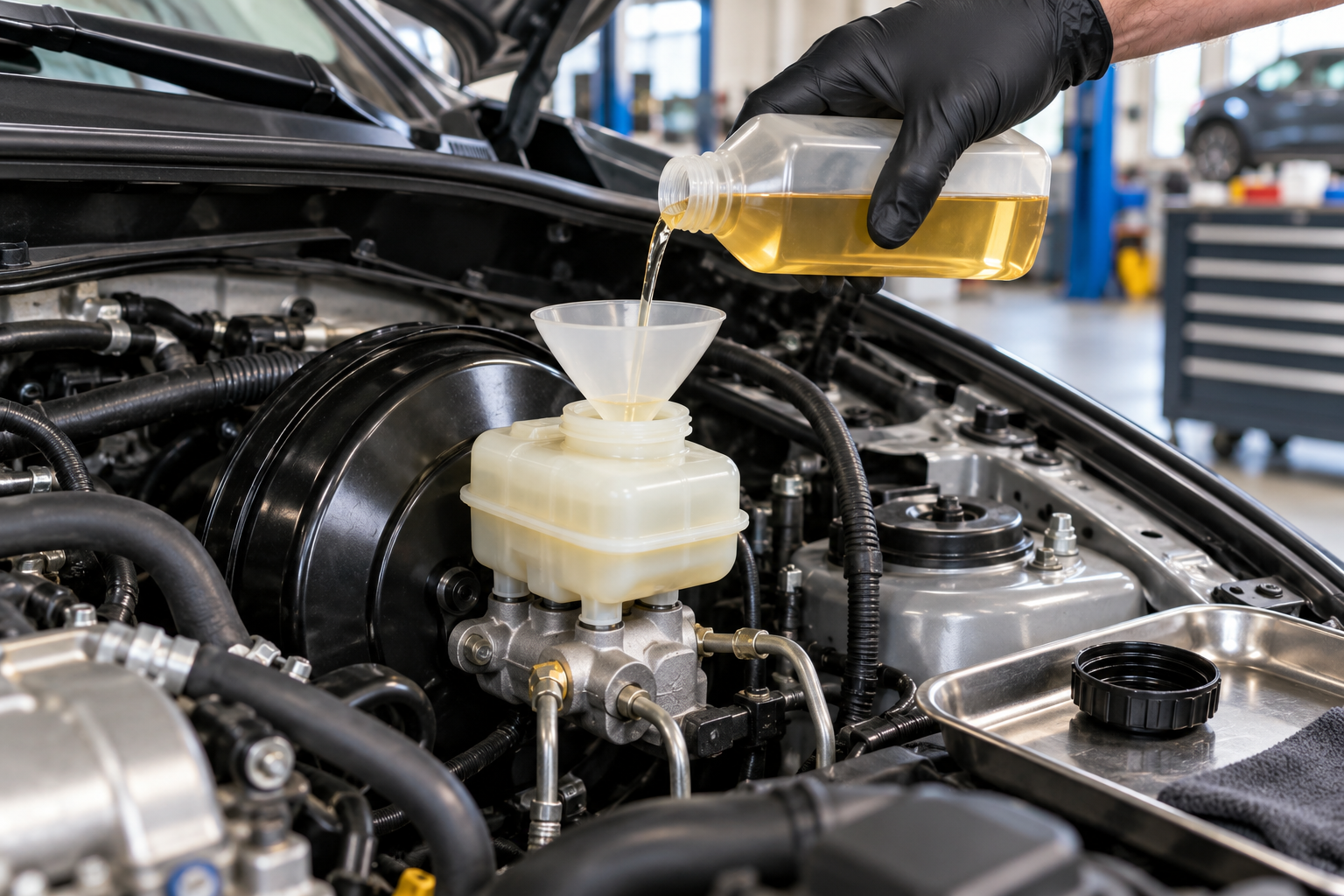
Brake fluid service is a vehicle maintenance procedure that involves inspecting the brake fluid, checking its condition, and replacing it when necessary. Brake fluid transfers the force from your foot on the brake pedal to the braking components at each wheel. Without properly functioning brake fluid, your vehicle may not stop as effectively as it should.
Over time, brake fluid can absorb moisture from the surrounding air. This moisture can reduce the fluid’s boiling point and contribute to corrosion inside the braking system. Regular brake fluid maintenance helps protect essential brake components, supports consistent braking performance, and reduces the risk of brake-related problems.
For most vehicles, brake fluid service involves checking the fluid level and condition, removing old fluid when replacement is due, and filling the system with the correct type of fresh brake fluid. The exact procedure and service interval depend on the vehicle manufacturer’s recommendations.
Brake fluid plays an essential role in your vehicle’s braking system. Although drivers often focus on brake pads, rotors, and calipers, brake fluid is equally important because it transfers hydraulic pressure throughout the system.
Here are the main reasons brake fluid service matters.
When you press the brake pedal, the master cylinder generates hydraulic pressure. Brake fluid transfers that pressure to the calipers or wheel cylinders, allowing the brakes to slow down or stop the vehicle.
If the fluid becomes contaminated or its performance deteriorates, the braking system may not operate as intended. Maintaining the fluid according to your manufacturer’s recommendations helps preserve consistent braking performance.
Many commonly used brake fluids are hygroscopic, meaning they absorb moisture over time. Moisture can enter through the fluid reservoir and permeate certain system components.
As the water content increases, the fluid’s boiling point decreases. Under heavy braking, especially when driving downhill or towing, excessive heat can cause moisture in the fluid to vaporize. Vapor compresses more easily than liquid, potentially reducing braking effectiveness.
Moisture and contamination can contribute to corrosion inside metal brake components. Internal corrosion may affect parts such as the master cylinder, brake lines, calipers, and other hydraulic components.
Replacing brake fluid when required helps limit moisture-related deterioration and supports the long-term condition of the braking system.
Healthy brake fluid helps the braking system transmit pressure effectively. If the fluid contains air or the system has another hydraulic problem, the brake pedal may feel soft or spongy.
A fluid replacement may be part of the solution, but it is not a fix for every pedal-related issue. A qualified technician should inspect the system to identify the actual cause.
Brake fluid service generally includes several steps. The exact process may vary depending on the vehicle’s design and the manufacturer’s service procedure.
The technician checks the brake fluid level and examines the reservoir and surrounding components for visible problems. They may also evaluate the fluid’s condition using an appropriate testing method.
A fluid level below the recommended range can indicate worn brake pads or a leak. Simply adding more fluid without identifying the cause may leave a serious problem unresolved.
Brake fluid condition cannot always be judged accurately by color alone. Some fluids naturally darken with age, while others may appear relatively clean despite containing excessive moisture.
Depending on the vehicle and service requirements, a technician may use a suitable test to evaluate moisture content or other indicators of fluid condition.
When replacement is needed, the technician removes old fluid according to the vehicle’s specified service procedure. This may involve bleeding the brake system at designated points to replace the old fluid with fresh fluid.
Some vehicles have specialized hydraulic systems, including electronic stability control or advanced braking systems, that require additional equipment or specific procedures.
The technician fills the system with the brake fluid type specified by the vehicle manufacturer. Common specifications include DOT 3, DOT 4, and DOT 5.1, although the correct type depends on the particular vehicle.
Using an incompatible fluid can damage components or affect braking performance. DOT 5 silicone-based fluid is different from glycol-based DOT 3, DOT 4, and DOT 5.1 fluids and should not be substituted unless the vehicle is specifically designed for it.
If air has entered the hydraulic system, bleeding may be necessary to remove it. Air can make the brake pedal feel soft and reduce braking effectiveness.
Not every routine fluid replacement requires the same bleeding procedure. The technician should follow the manufacturer’s instructions to ensure the system is serviced correctly.
The recommended brake fluid service interval varies by vehicle manufacturer, model, driving conditions, and brake fluid specification.
Some vehicles have a time-based replacement schedule, while others may use different maintenance recommendations. Your owner’s manual or official maintenance schedule is the best place to start.
Brake fluid may need attention sooner if:
Do not rely on mileage alone. Brake fluid can absorb moisture even when a vehicle is driven infrequently. Following the manufacturer’s time-based recommendations is important for cars that spend long periods parked.
Brake fluid often deteriorates without producing obvious symptoms. This is why following the maintenance schedule is more reliable than waiting for a warning sign.
However, several symptoms may indicate that your braking system needs immediate inspection.
A brake pedal that feels unusually soft or sinks farther than normal may indicate air in the system, a fluid leak, or another hydraulic problem.
Do not assume that a fluid flush alone will correct this symptom. Have the braking system inspected promptly.
A brake warning light may indicate low brake fluid, a parking brake issue, or another brake system fault. The meaning depends on the vehicle and the warning displayed.
Check your owner’s manual and arrange an inspection if the warning remains on. If braking performance is affected, stop driving as soon as it is safe to do so.
The brake fluid reservoir has minimum and maximum markings. If the level falls below the recommended range, the vehicle may have worn brake pads or a leak.
Because brake fluid is not normally consumed like engine oil, a sudden or significant drop deserves attention. Avoid simply topping it off without investigating the cause.
Longer stopping distances, inconsistent braking, or a change in pedal response can indicate a problem with the braking system. These symptoms can have several causes, including worn brake pads, damaged components, air in the lines, or degraded fluid.
Any unexpected change in braking performance should be checked by a professional.
Brake fluid that appears unusually dark, cloudy, or contaminated may need further evaluation. However, color alone cannot reliably determine whether replacement is necessary.
A technician can assess the fluid using the appropriate testing method and compare the results with the vehicle manufacturer’s requirements.
Important: If your brake pedal suddenly sinks, the vehicle struggles to stop, or you notice a significant fluid leak, do not continue driving. Arrange professional assistance or towing.
Different vehicles require different brake fluid specifications. Choosing the correct type is essential because brake fluids differ in their chemical composition and performance characteristics.
DOT 3 is a glycol-based brake fluid commonly specified for certain passenger vehicles. It is suitable only when the vehicle manufacturer permits its use.
DOT 4 is another glycol-based fluid often used in vehicles that require a higher minimum boiling-point specification than DOT 3. Some vehicles, particularly those with specific performance or braking requirements, call for DOT 4.
DOT 5.1 is a glycol-based fluid designed to meet its own performance specifications. Despite its similar name, it is not the same as DOT 5 silicone-based brake fluid.
DOT 5 is silicone-based and is not interchangeable with glycol-based DOT 3, DOT 4, or DOT 5.1 fluids. It is intended for systems specifically designed for it.
Always confirm the required specification in your owner’s manual or through a qualified technician. Do not choose a fluid simply because it has a higher DOT number.
Brake fluid service and brake bleeding are related procedures, but they are not exactly the same.
Brake fluid service focuses on inspecting and replacing fluid when necessary. Its purpose is to maintain fluid quality and help protect the hydraulic braking system.
Brake bleeding removes air from the brake lines and hydraulic components. Air can enter the system during repairs, after a leak, or when the fluid reservoir becomes too low.
A brake fluid replacement may include bleeding as part of the process, depending on the vehicle’s design and the manufacturer’s instructions. However, bleeding alone does not always mean that all old fluid has been replaced.
If the brake pedal feels spongy, the technician should determine whether air, a leak, a faulty component, or another problem is responsible before recommending a repair.
Brake fluid service costs vary depending on the vehicle, the type of brake fluid required, labor rates, and the complexity of the service procedure.
For many standard passenger vehicles in the United States, a routine brake fluid flush may cost approximately $80 to $180. Some vehicles may cost less, while luxury vehicles, specialized braking systems, or more complicated service procedures can cost considerably more.
Your final cost may depend on:
A routine fluid service does not normally include replacement of brake pads, rotors, calipers, or other damaged components. If these parts require attention, the repair shop should explain the additional charges separately.
Request an estimate that identifies the recommended service, the fluid specification, and any additional repairs before authorizing the work.
Some experienced vehicle owners may be able to perform basic brake fluid maintenance, but the procedure requires care, the correct equipment, and a clear understanding of the vehicle’s braking system.
An incorrect procedure can introduce air into the hydraulic system, contaminate the fluid, damage painted surfaces, or compromise braking performance.
Before attempting any work, consider the following:
Vehicles equipped with advanced braking systems may require a scan tool or a manufacturer-specific procedure to operate hydraulic valves and pumps during service.
If you are unfamiliar with hydraulic brake systems, professional service is the safer choice. Brakes are a critical safety system, and mistakes can have serious consequences.
Regular maintenance can help preserve braking performance and reduce the risk of avoidable repairs.
Check your owner’s manual for the recommended inspection and replacement intervals. Do not assume every vehicle needs brake fluid replacement at the same mileage or time interval.
Brake fluid leaks can reduce hydraulic pressure and compromise the braking system. If you notice fluid near a wheel, under the vehicle, or around the master cylinder, arrange an inspection.
Dirt and other contaminants should not enter the brake fluid reservoir. When checking the level, avoid leaving the cap off longer than necessary and follow the manufacturer’s instructions.
Always use fluid that meets the specified requirements. Never mix incompatible types or use a substitute simply because it is available.
A warning light, unusual pedal feel, or change in stopping performance should not be ignored. Routine maintenance helps, but symptoms may indicate a separate mechanical or hydraulic problem.
For drivers who want dependable braking performance, Uptown Import can be a point of contact for discussing vehicle maintenance needs and determining which brake system services are appropriate for their car.
Brake fluid service involves checking the fluid’s level and condition and replacing it when required. Depending on the vehicle and service procedure, the work may also include bleeding the braking system to remove old fluid or trapped air.
Your owner’s manual provides the primary replacement schedule. Fluid testing, a low reservoir level, or signs of contamination may also indicate a need for inspection. A soft pedal or brake warning light can signal a more serious problem and should not be treated as a routine fluid change alone.
A routine brake fluid service often takes around 30 to 60 minutes, although the exact time depends on the vehicle, the condition of the braking system, and whether additional diagnostic or repair work is needed.
Yes, when it is recommended by the manufacturer or testing indicates that replacement is needed. Brake fluid can absorb moisture over time, which may lower its boiling point and contribute to corrosion. The correct service interval varies by vehicle.
Old brake fluid does not automatically mean your brakes will fail immediately, but fluid that has deteriorated beyond the required condition can increase the risk of braking problems. Follow the manufacturer’s maintenance schedule and arrange an inspection if you notice warning lights, leaks, or changes in brake performance.
Brake fluid service is an important part of routine vehicle maintenance because it helps maintain hydraulic braking performance and protects the components that allow your car to stop safely. Over time, moisture and contamination can affect brake fluid, making inspection and timely replacement essential.
The best approach is to follow your vehicle manufacturer’s maintenance schedule, use the correct fluid specification, and investigate warning signs rather than relying on fluid appearance alone. If you experience a soft brake pedal, a significant fluid leak, or reduced stopping ability, have the braking system inspected immediately.
Keeping your brake fluid in the proper condition is a practical way to support reliable braking, protect essential components, and maintain your vehicle’s overall safety.