
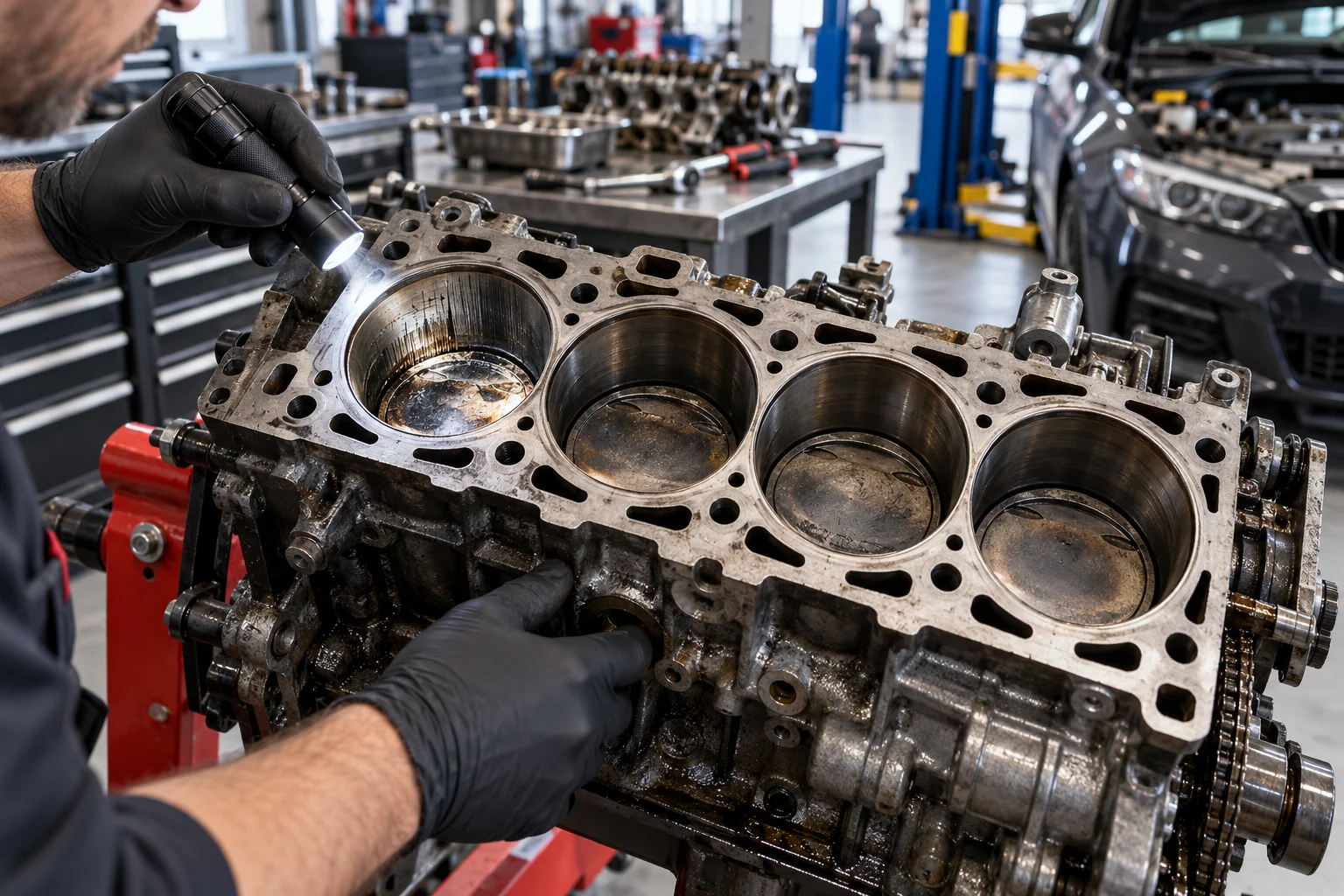
Engine locked up repair costs typically range from $500 to $5,000 or more, depending on the cause of the failure, the extent of internal damage, and the vehicle’s make and model. Minor issues, such as certain starter problems that prevent an engine from turning, may cost $150 to $800 to diagnose and repair. Rebuilding a damaged engine can cost approximately $2,500 to $6,000 or more, while replacing it with a used or remanufactured engine may cost $2,000 to $8,000 or more. Severe engine damage can make replacement more practical than repair. An accurate diagnosis is essential before deciding how much to spend.
A locked-up engine is one of the most serious mechanical problems a vehicle owner can experience. When you turn the key or press the start button and the engine will not turn over, it can leave you wondering whether the problem is minor or whether your vehicle needs a major repair.
The cost of fixing a locked engine depends on what caused the failure. In some cases, the problem may involve a faulty starter, a seized accessory, or another issue that prevents the engine from rotating. In more serious situations, internal components may have suffered extensive damage because of oil starvation, overheating, or mechanical failure.
Understanding engine locked-up repair cost can help you prepare for the expense, evaluate repair estimates, and determine whether rebuilding or replacing the engine is the better option.
An engine is considered locked up when its internal components cannot rotate normally. In a typical gasoline engine, the crankshaft must turn to move the pistons and allow the engine to complete its operating cycle.
If the crankshaft cannot rotate because of a mechanical obstruction, severe internal damage, or a related problem, the engine may not start.
However, an engine that will not start is not necessarily seized. A weak battery, faulty starter motor, damaged electrical connection, or seized accessory can produce similar symptoms.
A mechanic must determine whether the engine itself is mechanically locked before recommending an engine rebuild or replacement.
Several warning signs may indicate that your engine is locked or suffering from a serious mechanical problem:
These symptoms do not prove that the engine is seized. Avoid repeatedly attempting to start it, particularly if it stopped suddenly, overheated, or lost oil pressure.
The cost of repairing a locked engine varies considerably depending on the actual problem.
A relatively minor issue that prevents the engine from turning may cost a few hundred dollars to resolve. A severely damaged engine, on the other hand, may require thousands of dollars in parts and labor.
The following estimates provide a general guide to repair expenses in the United States.
Repair type | Estimated total cost |
Initial diagnosis and inspection | 100–300 |
Starter motor replacement, if the engine is not seized | 150–800 |
Seized accessory or related component repair | 150–800+ |
Minor internal engine repair | 500–2,000+ |
Engine removal and inspection | 500–1,500+ |
Engine rebuild | 2,500–6,000+ |
Used engine replacement | 2,000–5,000+ |
Remanufactured engine replacement | 4,000–8,000+ |
New engine replacement | 5,000–12,000+ |
These are broad budgeting estimates, not guaranteed prices. Costs can fall outside these ranges depending on the vehicle, engine type, labor rates, parts availability, and additional repairs.
The categories also describe different repair scenarios rather than expenses that should automatically be added together. For example, a used engine replacement estimate may already include engine removal, installation labor, and certain fluids.
Before approving major work, request a detailed estimate that separates diagnosis, parts, labor, and additional services.
Understanding the difference between parts and labor can help you determine why repairing a locked engine is often expensive.
The parts required depend on the cause of the failure.
If the engine is not actually seized, the repair might involve a starter motor, battery, electrical connection, or accessory component.
If internal engine damage is confirmed, the required parts can be much more expensive. Depending on the condition of the engine, a rebuild may require new pistons, piston rings, bearings, gaskets, seals, oil pumps, or other components.
A replacement engine may also require additional items, such as new filters, fluids, belts, hoses, and installation hardware.
Here is a general overview of potential parts expenses.
Part or component | Approximate parts cost |
Starter motor | 80–400 |
Battery | 100–300 |
Bearings and seals for an engine rebuild | 150–600+ |
Piston and ring components | 200–800+ |
Oil pump | 100–400 |
Engine gasket set | 100–500 |
Used replacement engine | 800–3,000+ |
Remanufactured replacement engine | 2,000–5,000+ |
Prices vary significantly by vehicle and engine. Some components may be included in a rebuild kit or replacement engine package, so avoid counting them twice when reviewing an estimate.
Labor is often one of the largest expenses when an engine is locked up.
Replacing a starter motor may take a relatively short time, depending on its location. Rebuilding an engine is much more involved because technicians must remove or disassemble components, inspect internal damage, replace worn parts, and reassemble the engine according to the manufacturer’s specifications.
Many repair facilities charge hourly labor rates that vary by location and specialization. A complex engine repair can require dozens of labor hours.
For example, removing an engine from a tightly packed engine compartment may require additional disassembly. Some vehicles also require specialized procedures, programming, or adjustments after replacement.
When reviewing an estimate, ask how many labor hours are included and whether engine removal, installation, testing, and related services are covered.
Identifying the cause of the failure is essential because it determines whether the engine can be repaired economically.
Engine oil lubricates moving components and helps reduce friction and heat. If the oil level becomes dangerously low or oil pressure drops, critical engine parts may no longer receive adequate lubrication.
Without sufficient lubrication, bearings can overheat, metal surfaces can wear rapidly, and internal components may seize.
Possible causes include oil leaks, neglected maintenance, oil pump failure, or an obstructed oil passage.
Repair costs depend on how much damage has occurred. A lubrication problem identified early may be manageable, but a completely seized engine caused by severe oil starvation may require rebuilding or replacement.
Excessive heat can damage the engine’s internal components.
A failed cooling fan, leaking radiator, malfunctioning thermostat, damaged water pump, or coolant loss can cause an engine to overheat.
In severe cases, excessive temperatures may cause components to expand beyond safe operating limits, potentially leading to piston seizure or other mechanical damage.
If your temperature gauge rises into the danger zone or a temperature warning appears, stop driving as soon as it is safe. Continuing to operate an overheating engine can turn a repairable problem into a major engine failure.
Engine bearings support rotating components and allow the crankshaft to operate smoothly.
When bearings become severely worn or fail because of insufficient lubrication, excessive heat, contamination, or mechanical damage, the crankshaft may become difficult or impossible to rotate.
Bearing damage can also affect the crankshaft and connecting rods.
A minor bearing-related issue may be repairable through engine rebuilding, but extensive damage can make replacement more economical.
A broken connecting rod, damaged piston, failed timing component, or other internal mechanical problem can prevent an engine from rotating.
Some failures occur gradually, while others happen suddenly and may be accompanied by loud knocking, grinding, or a complete loss of power.
The cost depends on which components have failed and whether the damage has spread to other engine parts.
A mechanic may need to remove and disassemble the engine to determine whether the existing block, crankshaft, and cylinder head can be reused.
Coolant can sometimes enter an engine cylinder because of a failed head gasket, cracked cylinder head, or damaged engine block.
In severe cases, liquid inside a cylinder can prevent the piston from moving upward. This condition is known as hydrolock.
Attempting to crank a hydrolocked engine can cause additional damage, including bent connecting rods or other internal failures.
If coolant has entered the cylinders, the engine must be assessed carefully before anyone attempts to start it.
Skipping oil changes, ignoring warning lights, and allowing cooling system problems to continue can increase the risk of serious engine damage.
Over time, degraded oil and accumulated deposits can interfere with lubrication, while unresolved overheating problems can weaken internal components.
Following the manufacturer’s maintenance schedule does not eliminate every possibility of engine failure, but it can reduce the risk of preventable problems.
Yes, some locked-up engines can be repaired, but the best solution depends on the cause and severity of the damage.
If the problem involves a starter motor or another component that prevents the engine from turning, an engine rebuild may not be necessary.
If the engine has seized internally, the mechanic must determine whether the damaged components can be repaired or replaced.
When the engine block and major internal components remain in good condition, replacing specific damaged parts may restore operation.
However, a minor repair should only be recommended after the underlying problem has been confirmed.
An engine rebuild involves disassembling the engine, inspecting its components, replacing worn or damaged parts, and reassembling it to the required specifications.
A rebuild may be suitable when the engine block and other major components are reusable.
It can be less expensive than a new engine in some situations, but costs may increase if the inspection reveals extensive damage.
Replacing the engine may be more practical when the existing engine has suffered severe internal damage.
Replacement options include used, remanufactured, and new engines. Each option has different costs, availability, and warranty terms.
A used engine may have a lower purchase price, but its condition and maintenance history can be uncertain. A remanufactured engine generally costs more but may offer a more predictable level of refurbishment, depending on the supplier.
Ask about the warranty, mileage, compatibility, and installation requirements before choosing a replacement engine.
Choosing between a used engine and a rebuild requires more than comparing the purchase prices.
Factor | Used engine | Rebuilt engine |
Initial cost | Often lower | Often higher |
Existing engine reused | No | Usually yes |
Condition history | May be limited | Depends on inspection and rebuild quality |
Labor | Removal and installation | Disassembly, rebuilding, and reassembly |
Warranty | Varies by supplier | Varies by repair facility |
Best suited for | Vehicles needing an economical replacement | Engines with reusable major components |
A used engine can be a practical option if a compatible unit is available from a reliable supplier. Before purchasing, verify its mileage, compatibility, documented condition, and warranty.
A rebuild may make sense when the existing engine is worth preserving and the block, crankshaft, and other major components remain suitable for reuse.
The best choice depends on the total installed cost rather than the price of the engine alone.
If your engine suddenly stops or refuses to rotate, taking the right steps can help prevent further damage.
Repeatedly turning the key or pressing the start button may worsen an existing mechanical problem.
If the engine stopped after overheating, losing oil pressure, or making loud mechanical noises, avoid further starting attempts.
If it is safe to do so, note any warning lights, unusual sounds, smoke, or visible fluid leaks. This information may help the technician identify the cause.
Do not open a hot cooling system or reach near moving components.
Have the vehicle transported to a qualified repair facility if the engine may be seized. Towing is generally safer than attempting to drive a vehicle with a serious engine problem.
Ask the mechanic to explain whether the engine is actually seized, what caused the problem, and whether repair or replacement is recommended.
A detailed estimate should separate diagnostic work, parts, labor, fluids, and other charges.
For an expensive engine repair, consider obtaining another estimate. Compare the proposed work, parts quality, warranty coverage, and total installed price before making a decision.
Although not every engine failure is preventable, routine maintenance can reduce the risk of some of the problems that lead to engine seizure.
Check engine oil regularly. Follow your vehicle manufacturer’s instructions and maintain the oil level within the recommended range.
Change the oil on schedule. Use the recommended oil specification and service interval for your vehicle and driving conditions.
Monitor engine temperature. Investigate coolant leaks, temperature warnings, and recurring overheating before they cause serious damage.
Address oil pressure warnings immediately. Low oil pressure can threaten engine lubrication. Stop the engine when safe and arrange an inspection.
Repair leaks promptly. Persistent oil or coolant leaks can contribute to lubrication or cooling problems.
Pay attention to unusual noises. Knocking, grinding, and sudden changes in engine sound may indicate developing mechanical issues.
Follow recommended maintenance. Regular inspections can help identify problems before they become more expensive.
Whether repairing a locked-up engine is worthwhile depends on the vehicle’s value, mileage, overall condition, and the total repair estimate.
For a newer vehicle in good condition, an engine replacement may be a sensible investment if the rest of the vehicle is reliable.
For an older vehicle with high mileage, substantial body damage, or other expensive maintenance needs, the repair may cost more than the vehicle is worth.
Consider these questions before making a decision:
Compare the complete repair cost with the cost of replacing the vehicle. A professional diagnosis will help you make this decision using actual information rather than assumptions.
Engine locked up repair cost can range from a few hundred dollars for a related starting-system problem to several thousand dollars for a rebuild or engine replacement. The most important step is determining whether the engine is genuinely seized and identifying the cause of the failure.
Parts and labor expenses depend on the vehicle, engine design, extent of internal damage, and repair method. A used engine may offer a lower initial cost, while a rebuild may be appropriate if the existing engine’s major components remain reusable.
Avoid repeatedly trying to start an engine that has stopped after overheating, losing oil pressure, or producing loud mechanical noises. Arrange a professional inspection, request an itemized estimate, and compare repair and replacement options before committing to expensive work.
Taking these steps can help you avoid unnecessary expenses and choose the most practical solution for your vehicle.