What Happens If You Don’t Change Your Oil?
Missing an oil change by a small amount does not normally cause an engine to instantly fail.
Repeated neglect is the real concern.
Overextended oil can contribute to:
Increased Contamination
Combustion by-products and contaminants accumulate over time.
Sludge Formation
Severe oil neglect can allow deposits and sludge to develop inside the engine.
Increased Friction
Degraded lubrication can reduce protection between moving components.
Increased Engine Wear
Bearings, timing components, camshafts, pistons, and other parts rely on proper lubrication.
Reduced Engine Life
Long-term maintenance neglect can eventually contribute to expensive internal damage.
An oil change is inexpensive compared with an engine replacement. That particular bit of automotive mathematics is brutally simple.
Oil Change Light vs. Oil Pressure Light
Drivers often confuse these two warnings.
Oil Change Reminder
This normally indicates scheduled maintenance is due.
You generally have time to arrange service soon.
Oil Pressure Warning Light
This is much more serious.
A red oil-can symbol can indicate that the engine does not have adequate oil pressure.
If it remains illuminated while the engine is running, continuing to drive may risk severe engine damage.
Safely stop the vehicle and follow the manufacturer’s instructions rather than assuming you can simply drive another week until your next oil change.
Should the Oil Filter Be Changed With the Oil?
Generally, yes.
The oil filter captures contaminants circulating through the engine.
Installing fresh oil while leaving an old, contaminated filter in place usually defeats part of the purpose of the service.
A standard oil-change service normally includes:
- Draining old engine oil
- Replacing the oil filter
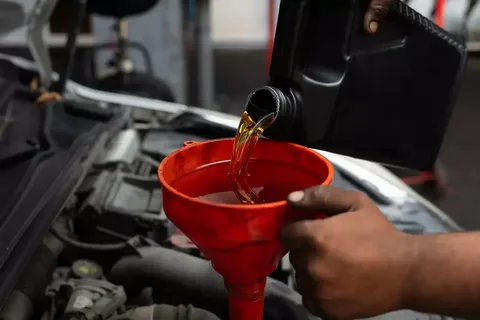
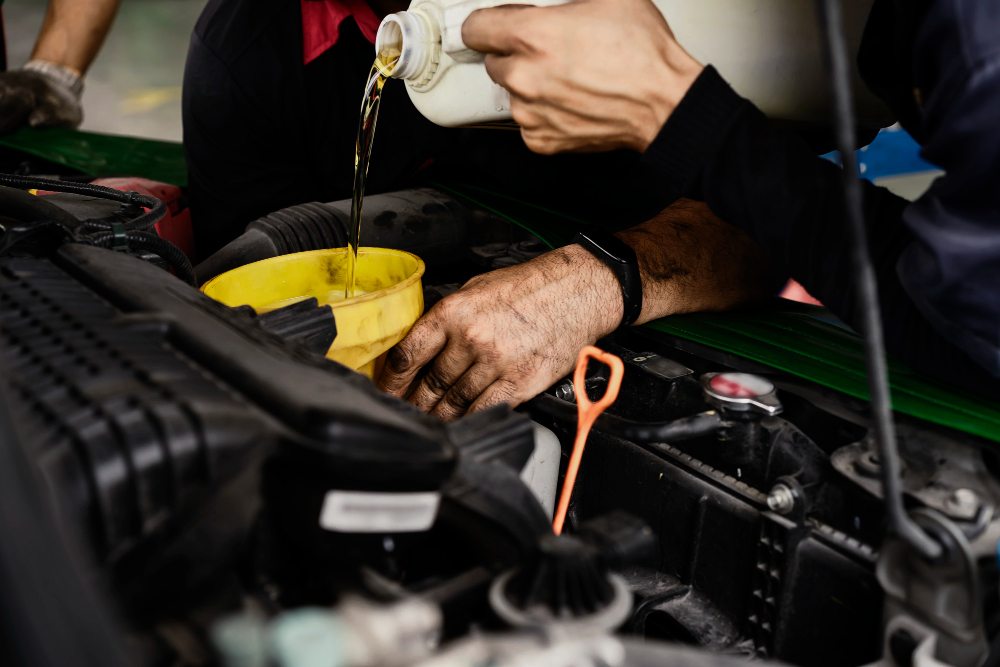
- Refilling with the correct oil
- Checking the oil level
- Resetting the maintenance indicator where applicable
A broader maintenance visit may include additional inspections.
What Else Should Be Checked During an Oil Change?
An oil service is a good opportunity to inspect other routine maintenance items.
Depending on the vehicle, technicians may check:
- Coolant
- Brake fluid
- Washer fluid
- Transmission fluid where appropriate
- Tire pressure
- Tire condition
- Belts
- Hoses
- Visible leaks
- Air filter
- Battery condition
- Brake components
For drivers of European and Asian import vehicles in Minneapolis, Uptown Imports provides oil changes, factory-recommended maintenance, diagnostics, and broader mechanical repair services, making routine oil service an opportunity to keep track of the vehicle’s overall condition.
Can You Change Your Own Engine Oil?
Yes, if you have:
- Appropriate tools
- Safe lifting equipment
- The correct oil
- The correct filter
- Suitable knowledge
- A way to dispose of used oil responsibly
However, several mistakes can create serious problems.
These include:
- Using incorrect oil
- Installing the wrong filter
- Overfilling the engine
- Underfilling the engine
- Damaging the drain plug
- Forgetting the drain plug
- Double-gasketing the oil filter
- Failing to check for leaks
If you are not comfortable performing the service correctly, professional oil changes are usually straightforward and relatively inexpensive.
How Do You Know What Oil Your Car Needs?
Do not guess based on whatever bottle happens to be on sale.
Check:
- Owner’s manual
- Oil-fill cap
- Manufacturer maintenance information
You may see viscosity grades such as:
- 0W-20
- 0W-30
- 5W-20
- 5W-30
- 5W-40
But viscosity is only part of the specification.
Certain European and Asian manufacturers also require oil meeting particular manufacturer approvals or performance standards.
Using the correct specification is particularly important for turbocharged, diesel, high-performance, and modern emissions-equipped engines.
Signs You May Need More Than an Oil Change
Sometimes drivers book an oil service only to discover another issue is responsible for their symptoms.
Professional diagnosis may be needed if you notice:
- Persistent low-oil warnings
- Heavy oil leaks
- Blue exhaust smoke
- Severe engine knocking
- Repeated overheating
- Low oil pressure
- Metal particles in the oil
- Oil mixed with coolant
- Milky residue on the dipstick
- Excessive oil consumption
Changing the oil alone will not repair a mechanical failure.
How to Avoid Missing Your Next Oil Change
Keeping track is simple once you establish a routine.
You can:
- Follow the vehicle’s oil-life monitor
- Record mileage after every service
- Save maintenance invoices
- Use a phone reminder
- Check your service sticker
- Keep digital vehicle records
- Follow the manufacturer’s maintenance schedule
Routine maintenance is much easier when you do not have to play detective every six months.
Final Thoughts
So, how do you know if your car needs an oil change? The best indicators are your vehicle’s oil-life monitor, maintenance schedule, mileage, time since the previous service, and any unusual symptoms involving oil level or engine operation.
Do not rely solely on oil color or the outdated assumption that every vehicle needs fresh oil exactly every 3,000 miles. Modern engines and oils vary significantly, so follow the specification and interval recommended for your particular vehicle.
Regular oil changes are one of the simplest forms of preventative maintenance. Staying on schedule helps keep engine components properly lubricated, reduces contamination, and gives technicians an opportunity to spot leaks or developing maintenance issues before they become considerably more expensive.