
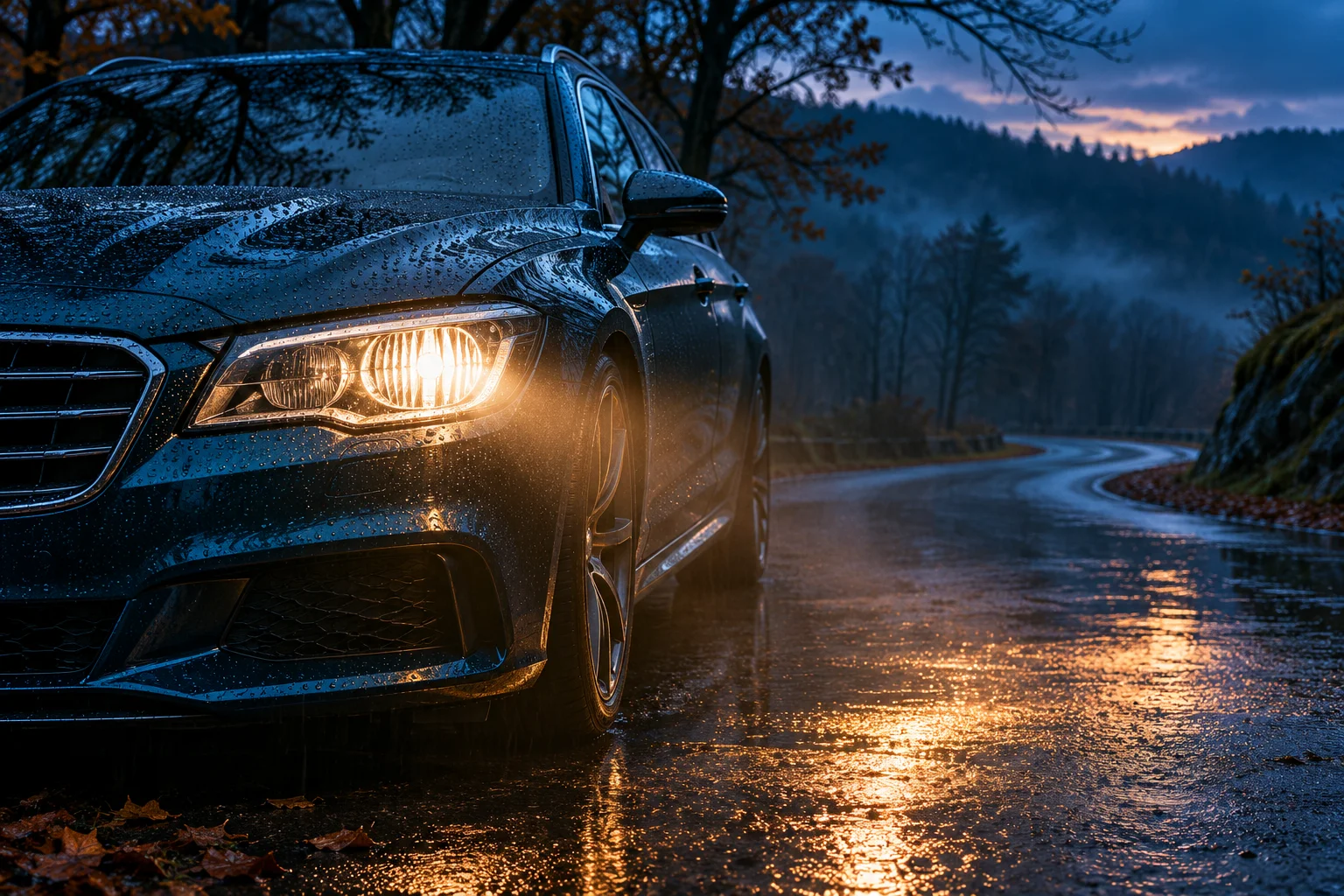
Selecting the right headlight bulb for your car is crucial for safe and convenient driving, especially at night or in extreme weather conditions. There are several types of headlight bulbs available, which is why identifying the right option can be confusing sometimes. A few bulbs are manufactured to offer standard road visibility with longevity, whereas others provide brighter, whiter light that enhances clarity or offers a more stylish appearance. Understanding the differences between these options can help you select a bulb that is appropriate for your driving needs and vehicle.
This blog explains different headlight bulb choices, their features and advantages, and what to look for before choosing a replacement.
Selecting the right headlight bulb includes checking your vehicle’s specifications, bulb size, beam type and headlight technology. If you use an incompatible bulb, it can affect its brightness, fitment and beam pattern. Look at the following factors to identify the right replacement for your vehicle.
One of the easiest methods to identify the correct headlight bulb for your car is to check the owner’s manual. It generally gives information about the needed bulb size, fitting and type for both high-beam and low-beam headlights. Moreover, you can also review the manufacturer’s website or contact an authorized dealer if the information is missing in the manual.
Headlight bulbs are available in different sizes like H1, H4, H7 and 9005. To identify its specific designation, review the code printed on the base or casing of your existing bulb. You can also remove the installed bulb for inspection if you have difficulty reading. It is important to ensure the replacement has the correct designation and fitment for your car.
Different headlight technologies are used by vehicles, and each needs a compatible replacement bulb. The most common types are halogen, HID (Xenon) and LED headlights. Halogen bulbs are mostly available in traditional headlight systems, whereas HID bulbs generate light with an electric arc. LED headlights commonly use light-emitting diodes and may incorporate electronic components. That is why it is important to examine your existing headlight system to make sure the replacement is compatible with its technology.
High-beam and low-beam headlights are used for different applications and may need different bulbs. High beams provide longer-range illumination for dark roads, whereas low beams offer shorter-range illumination for normal driving without affecting the vision of oncoming drivers. Some vehicles use separate bulbs for each function, while others may use dual-filament bulbs for both. Review your vehicle’s needs before buying a replacement.
The replacement bulb must align with your headlight housing and offer the right beam pattern. A bulb that does not spread light properly can create dark spots, minimize visibility or dazzle other road users. Make sure to avoid choosing a bulb based on brightness alone. Before buying a replacement, always review its compatibility with your car’s headlight design and follow the manufacturer’s specifications.
Headlight bulbs are available in different technologies. Each type provides different levels of brightness, energy efficiency, lifespan and performance. The most common types include halogen, HID (Xenon), LED and laser headlights. Knowing their differences can help you select an appropriate option for your vehicle.
The most common type of automotive headlights is halogen bulbs. They use a tungsten filament enclosed in a glass bulb that contains halogen gas to emit light when electricity passes through the filament. These bulbs are usually cost-effective, widely available and easy to replace. But they use a greater amount of energy and have a shorter lifespan compared to LED and HID alternatives.
Light Emitting Diode (LED) headlights use semiconductor technology to generate light. These bulbs are energy efficient, have a longer lifespan and offer bright illumination. LEDs also allow vehicle owners to have smaller and more modern headlight designs. However, replacement LED bulbs should be compatible with the vehicle’s headlight housing and electrical system to offer the right beam pattern.
High-Intensity Discharge (HID) bulbs are also called Xenon headlights. They generate light through an electric arc between two electrodes in a gas-filled bulb. These bulbs offer brighter illumination and can provide better visibility over longer distances compared with traditional halogen bulbs. HID headlights are mostly present in some premium cars. However, they need a compatible ballast and are expensive to replace.
Laser headlights are an advanced lighting technology commonly used in specific high-end cars. They use laser diodes to emit light, converting it into visible illumination through a special phosphor material. These headlights offer more powerful, long-distance illumination and enhance visibility at night. However, they are highly expensive and not typically sold as standard replacement bulbs.
Consider a few crucial factors to ensure it aligns with your vehicle’s needs before buying a replacement headlight bulb.
It is important to examine whether a bulb is compatible with your vehicle, as not every bulb fits each vehicle. Make sure to check the vehicle manufacturer’s manual and existing bulb specifications to find the right bulb type. Before buying a replacement, you have to look for the vehicle’s make, model and year.
Headlight bulbs can create different lighting effects. Some provide a standard halogen light, whereas others use coatings to produce a whiter-looking beam. It is important to select an option that meets your requirements without compromising visibility and road safety.
Consider how much illumination you require under your regular driving conditions. Halogen, HID and LED bulbs provide different levels of brightness and light distribution. Make sure to select a bulb that offers enough visibility for your driving needs while maintaining the right beam pattern.
Make sure to check whether a replacement bulb is approved for road use in your country and appropriate for your vehicle’s headlight assembly. Because not every bulb is legal for use on the road, using an incompatible bulb can directly influence beam alignment and be the reason for glare for other drivers.
Selecting the right headlight bulb is based on your vehicle’s specifications, driving conditions, and preferred lighting performance. Halogen bulbs are usually an appropriate option for daily driving, whereas HID and LED headlights provide different levels of brightness, energy efficiency and lifespan. Laser headlights offer advanced, long-distance illumination and are commonly found in high-end vehicles. Make sure to check bulb requirements, compatibility and local road-use regulations before buying a replacement. This will help you select an appropriate bulb that meets your driving needs and supports safe and reliable driving