
Every vehicle owner knows how to maintain it, but checking the transmission fluid level is one of the important steps in that. Transmission fluid is used in a vehicle to protect its mechanical parts from wear and damage, providing smooth operation.
Transmission fluid level can be checked by checking the condition of the fluid, taking a sample of the oil, and checking the marker levels on the dipstick. This blog will help you learn about transmission fluid, its types and how to check the transmission fluid level.
A lubricant, coolant and protective oil used in a vehicle to transfer power to the wheels while allowing smooth operation. It increases the efficiency of the gearbox, reduces friction and makes it easy to shift gears without wearing out its mechanical parts.
There are several types of transmission fluids, and each one is formulated for specific transmission fluid design and vehicle manufacturer requirements. However, three main types of transmission fluid are:
Having the right transmission fluid and checking it regularly makes sure you have a safe ride in the long run. It is not too difficult, time-consuming or expensive to check the transmission fluid on your own. Here is a step-by-step process for checking the transmission fluid in your vehicle.
The first thing to do before checking the transmission fluid is to consult with the manufacturer to understand the type of lubricant or oil used in your vehicle and which type of oil you should refill with.
Drive the vehicle and then park it on a level surface until it reaches the optimal temperature. Engage the gears and then set it to the Park or Neutral position with the engine running before checking the automatic transmission fluid. For manual transmission fluid, keep the engine off.
Open the hood and locate the dipstick. If you have an automatic transmission, there may be a sealed transmission that does not need to be checked or refilled, but if the dipstick is available, ensure it is the transmission fluid dipstick rather than the engine oil dipstick.
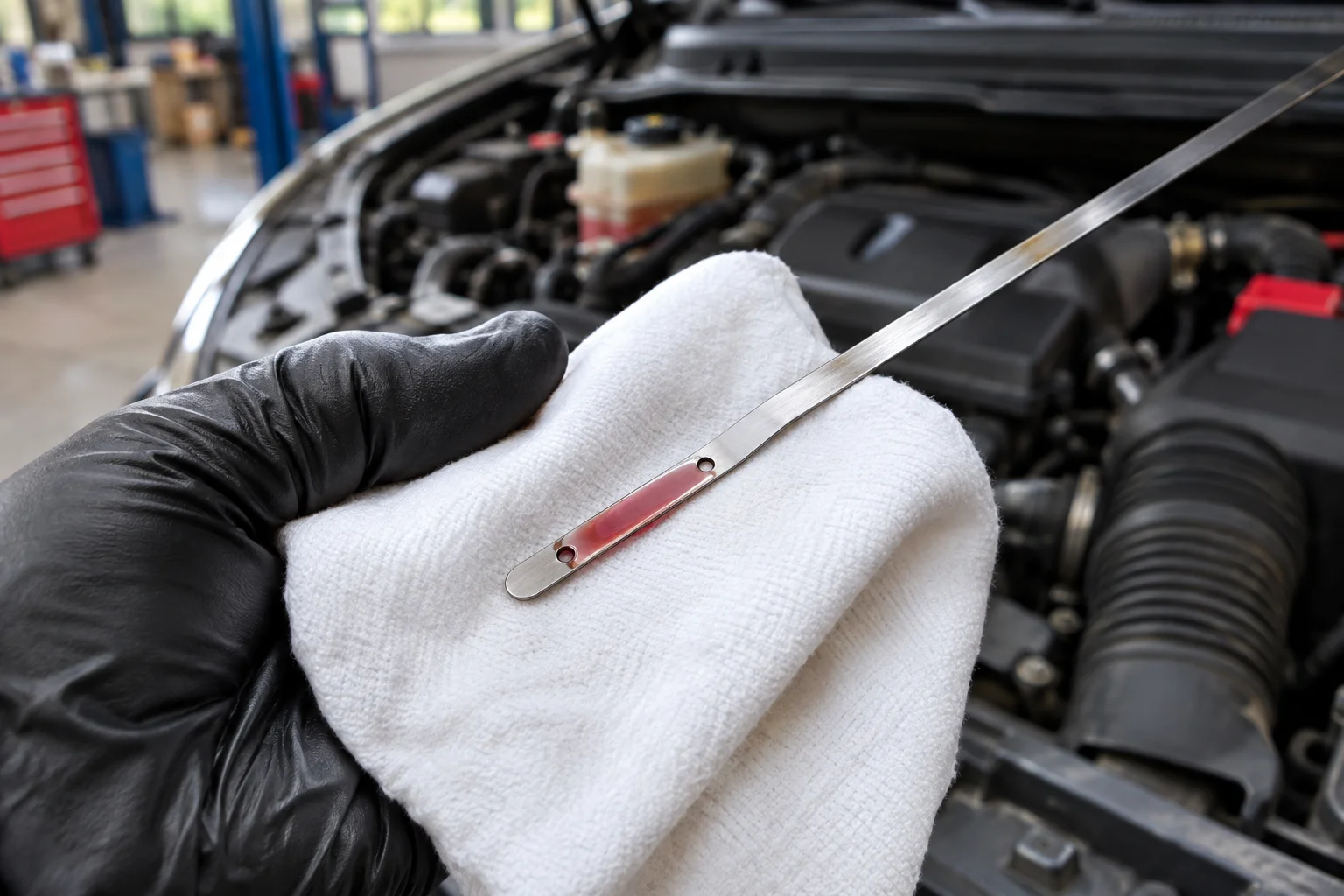
Take out the dipstick and clean it with a soft white cloth, then reinsert it into the transmission fluid. Check the fluid condition on the cloth to see whether it has any debris or a color change from red or pink to dark or black to know when to change the fluid.
Now take out the dipstick again from the transmission fluid and check the markers on it. These markers will help you determine the level of the fluid to understand whether you need to refill it or can drive without refilling.
Unusual noises, strange odor, puddling and slipping gears are some common signs that indicate the transmission fluid of your vehicle needs to be changed now. Some other warning signs to know when to change the transmission fluid include:
However, most of the signs are similar for both automatic and manual transmissions. Still, some are more related to one, such as slipping gears for automatic transmission while grinding noises for manual transmission fluid.
Changing transmission fluid depends on the vehicle make and model and your driving habits. Moreover, manufacturer guidelines can help you better understand how and when to change the transmission fluid. According to the type of transmission, you can expect:
The vehicle used for heavy work such as towing or for everyday use needs to change transmission fluid every 15000 miles, no matter what type of transmission it has.
Transmission fluid is a protective lubricant, besides engine oil, that protects the vehicle’s mechanical parts from damage and helps streamline their function. It provides hydraulic pressure and reduces friction.
Check the transmission fluid level by taking an oil sample from the transmission fluid and checking the marker levels on the dipstick. If you are noticing gears slipping, delayed engagement, grinding sounds and a burning smell, book an appointment with Uptown Imports for a free inspection, including a fluid check.
Dipsticks usually contain minimum, maximum and low or full range indicators that show whether the transmission fluid is at a safe operating level or not.
Yes, for an automatic transmission, keep the engine running while checking and adding fluid to be careful around moving parts.
Yes, you can add transmission fluid if it is low, as long as it is the right type and you follow the manufacturer’s instructions.
Yes, your car will run better with a transmission fluid change if the transmission is in good condition.
The transmission fluid typically lasts about 30,000 to 100,000 miles, depending on the vehicle type and driving habits.